Chvishtari – Georgian Cheesy Cornbread from Samegrelo
Ingredients:
Preparation mode:
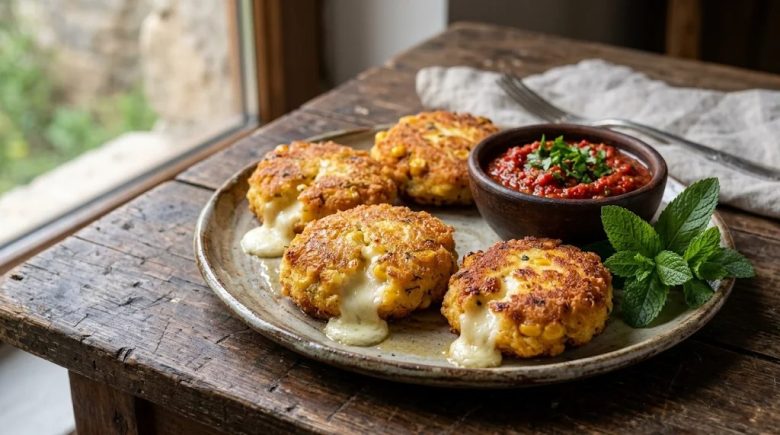
👉 Chvishtari is a rustic cornbread from Samegrelo in western Georgia: fine cornmeal kneaded with plenty of grated sulguni cheese and a little butter, shaped into small flat cakes and fried until golden, with cheese melting out of every crack. It is the cheesy cousin of plain mchadi and a favourite next to Megrelian dishes like elarji, ajika and spicy kharcho. With just a few ingredients and no flour or yeast, it is also naturally gluten-free.
How to Make Chvishtari
- Mix the dry ingredients. Put the cornmeal and salt in a bowl and stir in two thirds of the grated cheese.
- Add hot water. Pour in the hot water or milk little by little, stirring with a spoon, until the mixture comes together into a soft, slightly sticky dough. Add the melted butter.
- Knead. When the dough is cool enough to handle, knead it with wet hands for 1–2 minutes. It should hold its shape without cracking too much.
- Shape. Divide into 8 pieces. Flatten each into an oval cake about 1.5 cm thick and press the remaining cheese into the tops and sides.
- Fry. Heat a heavy pan with a little butter over medium-low heat. Fry the cakes for 5–6 minutes per side until deep golden and crisp, with the cheese melted.
- Or bake. Alternatively, put the cakes on a buttered tray and bake at 200°C (390°F) for 15–20 minutes.
- Serve. Serve hot, on their own or with ajika, matsoni, lobio or a fresh tomato and cucumber salad.
Tips for the Best Chvishtari
- Use fine cornmeal – coarse polenta makes crumbly chvishtari.
- Wet your hands while shaping so the dough doesn’t stick.
- Cook over medium-low heat: the cornbread needs time to cook through while the outside crisps.
FAQ
What is chvishtari?
Chvishtari is a Georgian cornbread from Samegrelo made with cornmeal and lots of sulguni cheese, fried or baked into small golden cakes.
What is the difference between chvishtari and mchadi?
Mchadi is plain cornbread made from cornmeal, water and salt, while chvishtari adds cheese and butter, so it is richer and gooey inside.
Is chvishtari gluten-free?
Yes – it is made with cornmeal only, without wheat flour. Check that your cornmeal is certified gluten-free if needed.
👉 More Megrelian and Georgian classics: mchadi, elarji, Megruli khachapuri, gebzhalia and ajika. See our guide to Georgian bread.
Ask the Chef:
Missing an ingredient or cooking for a crowd? Ask anything about this Chvishtari recipe.
AI cooking assistant. Answers can be wrong — always check allergens yourself.
Footnotes:
No sulguni? Use a mix of mozzarella and a little feta – you want a cheese that melts but is also slightly salty.
Chvishtari is best eaten warm on the day it is made. Reheat leftovers in a dry pan.