Kazakh Food: 12 Traditional Dishes from the Steppe
05November2026
Cuisines Guide Team
Cuisines Guide is a small team from Georgia sharing home-style recipes from around the world – from khinkali and khachapuri to Turkish, Polish, Moroccan and Portuguese classics – explained step by step for home cooks.
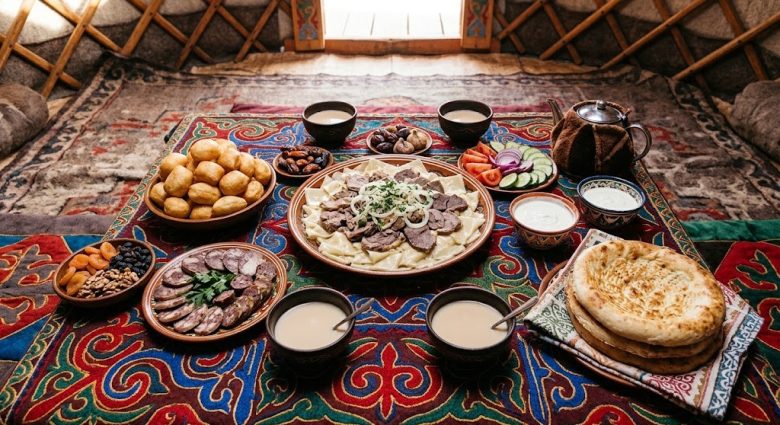
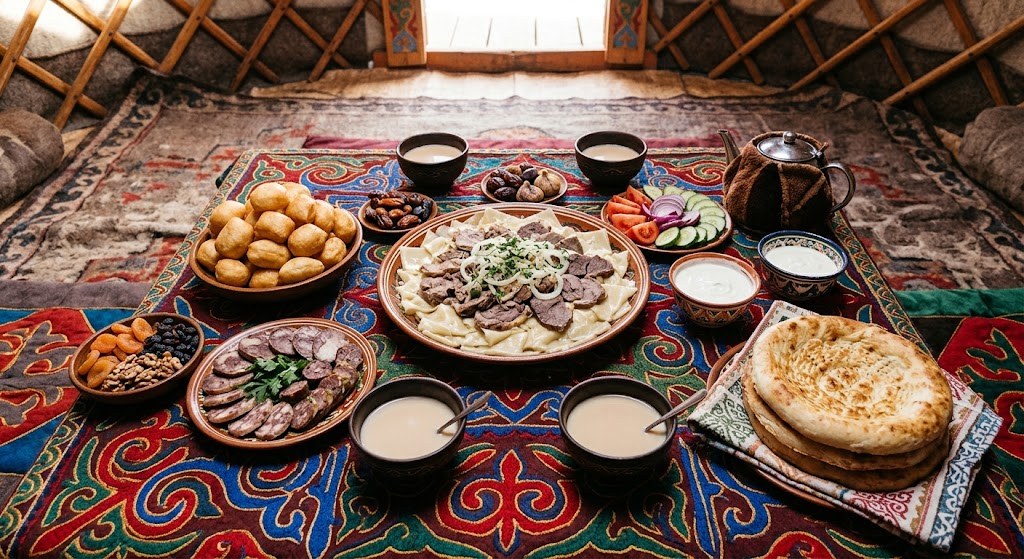
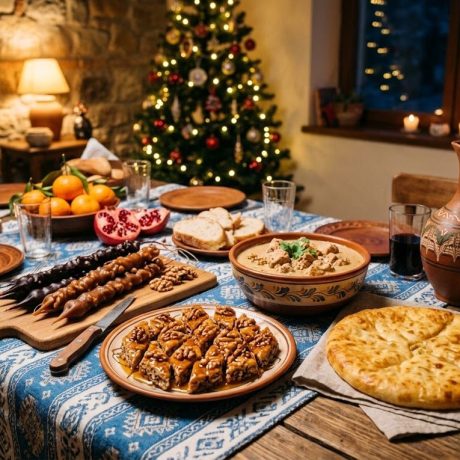
👉 Kazakh food grew out of the nomadic life of the great steppe. For centuries Kazakh families moved with their herds of sheep, horses and camels, so their cooking is built on meat, milk and dough – simple ingredients turned into generous dishes meant to be shared. Hospitality is sacred: every guest is invited to the dastarkhan, the richly laid table, and no one leaves hungry. Here are 12 traditional Kazakh dishes and drinks you should know.
🥩 1. Beshbarmak – the National Dish
Meat boiled slowly on the bone and served over wide, thin homemade noodles with a soft onion sauce. The name means “five fingers”, because it was eaten by hand. At festive meals the host serves the best pieces of meat to the most honoured guests. 👉 Beshbarmak recipe
🍲 2. Sorpa
The rich broth left from cooking beshbarmak. It is never wasted – it is served in bowls (kese) at the end of the meal, sometimes with a little kurt dissolved in it.
🌭 3. Kazy
A festive sausage made from horse rib meat and its fat, seasoned with salt, pepper and garlic, then dried or smoked. Sliced kazy appears on every celebration table, often with beshbarmak.
🍳 4. Kuyrdak
A hearty fry-up of liver, heart, kidneys and meat with onions and potatoes, traditionally cooked on the day an animal is slaughtered so nothing is wasted.
🥠 5. Baursak
Puffy pieces of fried dough – round or square – piled high on the dastarkhan and eaten with tea, butter, honey or jam. No Kazakh celebration is complete without them.
🧀 6. Kurt
Small, hard, salty balls of dried fermented milk. They keep for months, which made them perfect food for nomads on the move, and they are still a favourite snack today.
🥛 7. Kumys and Shubat
Kumys is lightly fermented mare’s milk, slightly sour and fizzy; shubat is its camel-milk cousin, thicker and richer. Both are prized as refreshing, nourishing summer drinks.
🍚 8. Palau (Plov)
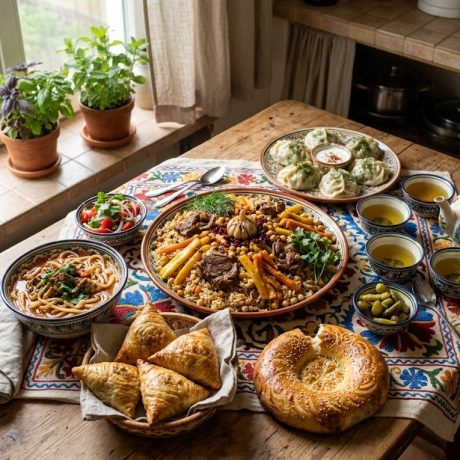
Rice cooked in a cast-iron kazan with lamb, carrots and onion – the Kazakh version of the plov loved across Central Asia. 👉 Plov recipe
🥟 9. Manty
Large steamed dumplings filled with chopped meat, onion and sometimes pumpkin, served with sour cream. 👉 Manti recipe
🥐 10. Samsa
Flaky baked pastries with a lamb and onion filling, sold hot at markets across Kazakhstan and Uzbekistan. 👉 Samsa recipe
🍜 11. Lagman
Hand-pulled noodles with meat and vegetables, brought to Kazakhstan by Uyghur and Dungan cooks and now eaten everywhere. 👉 Lagman recipe
🌱 12. Nauryz Kozhe
A special soup prepared for Nauryz, the spring new year celebrated on 21–22 March. It is made from seven ingredients – usually water, meat, salt, grain, milk, fat and flour or rice – as a symbol of good fortune for the year ahead.
🍵 Tea and the Dastarkhan
Kazakhs drink a lot of strong black tea, usually with milk. The host pours only a little into each bowl so it stays hot, and refills it again and again – turning your bowl upside down or covering it with your hand politely means you have had enough. The dastarkhan is laid with baursak, dried fruit, nuts, sweets, cream and jam long before the main dish arrives.
🌿 What Makes Kazakh Food Special
Meat at the centre – lamb, beef and horse meat, usually boiled rather than fried.
Dairy in every form – kumys, shubat, kurt, cream and butter.
Dough – noodles, baursak, flatbreads and dumplings made by hand.
Mild seasoning – salt, black pepper and onion let the meat shine.
Sharing – food is served on large platters for everyone at the table.
❓ FAQ
What is the national dish of Kazakhstan? Beshbarmak – boiled meat with flat noodles and onion sauce – is considered the national dish.
Is Kazakh food spicy? No. Kazakh cooking is savoury and mild, seasoned mainly with salt, black pepper and onion.
What is the difference between Kazakh and Uzbek food? Uzbek cooking, rooted in settled oasis towns, uses more spices, rice and vegetables. Kazakh cooking comes from nomadic herders and focuses on boiled meat, dairy and dough. The two share many dishes, such as plov, manty and samsa.