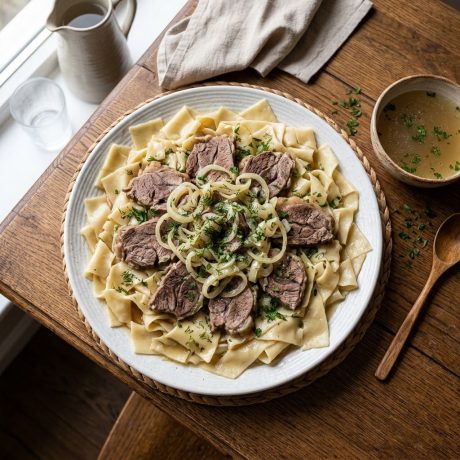
👉 Beshbarmak is the national dish of Kazakhstan and one of the great celebration meals of Central Asia: tender meat slowly boiled on the bone, served over wide, silky homemade noodles and topped with soft onions cooked in the rich broth. The name means “five fingers”, because nomadic families traditionally…
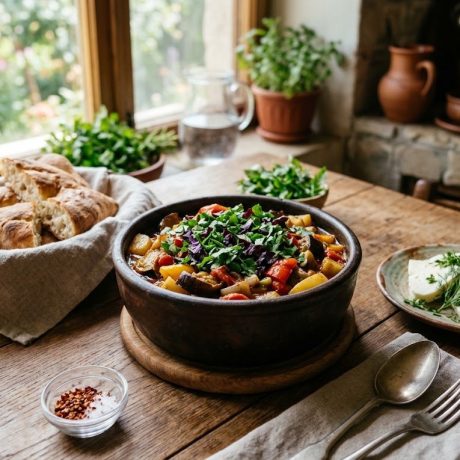
👉 Ajapsandali is Georgia’s beloved summer vegetable stew: eggplant, peppers, onions, tomatoes and potatoes cooked slowly together and finished with a big handful of basil, cilantro, parsley and garlic. It looks a little like French ratatouille, but the generous fresh herbs, the touch of chili and coriander make it unmistakably…
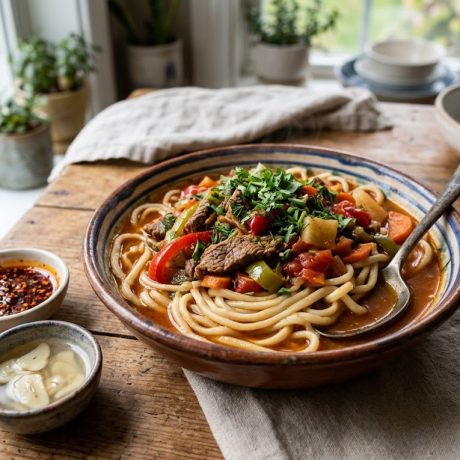
👉 Lagman (also written laghman) is the great noodle dish of Central Asia: long, chewy hand-pulled noodles served with a rich sauce of meat, peppers, tomatoes and vegetables. It came to Uzbekistan, Kyrgyzstan and Kazakhstan with the Uyghur and Dungan people, whose cooks are famous for stretching a single piece…
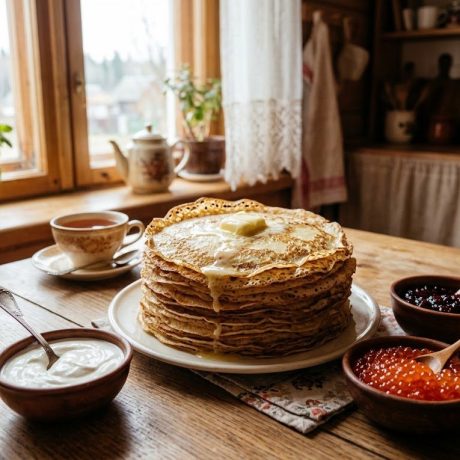
👉 Blini are the thin pancakes of Russia, Ukraine and Belarus – golden, slightly lacy and soft enough to fold around almost anything. They are the symbol of Maslenitsa, the week-long festival before Lent, when their round shape stands for the returning sun, but families make them all year round:…
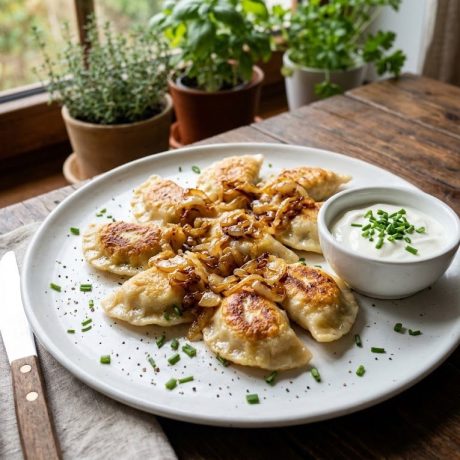
👉 Pierogi ruskie are the most loved dumplings in Poland: soft half-moons of dough filled with mashed potato, crumbly farmer’s cheese and golden fried onion, boiled and then often fried in butter. The name does not mean “Russian” – ruskie refers to Ruthenia, the historic region that today covers western…
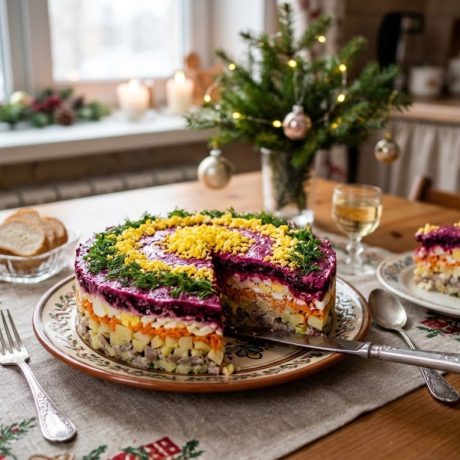
👉 Herring under a fur coat – seledka pod shuboy, or simply “shuba” – is the bright purple layered salad found next to Olivier on almost every New Year table in Russia, Ukraine, Belarus, Georgia and the Baltic countries. Salty herring and onion sit at the bottom, covered by layers…
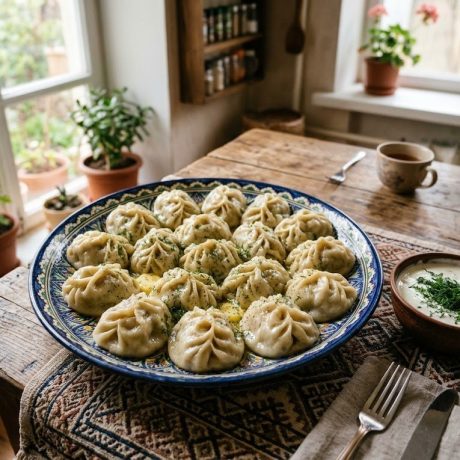
👉 Manti are the big steamed dumplings of Central Asia, loved in Uzbekistan, Kazakhstan, Kyrgyzstan and far beyond. A very thin dough is wrapped around a juicy filling of hand-chopped lamb and plenty of onion, then the dumplings are steamed in a tall multi-level pot called a kaskan until the…
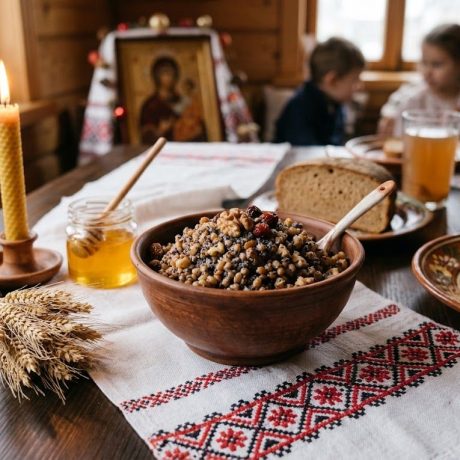
👉 Kutia is the first and most sacred dish of the Ukrainian Christmas Eve supper, Sviat Vechir. It is a simple mixture of whole wheat berries, ground poppy seeds, honey and walnuts – ingredients that stand for a rich harvest, prosperity and a sweet life. Families taste it before any…
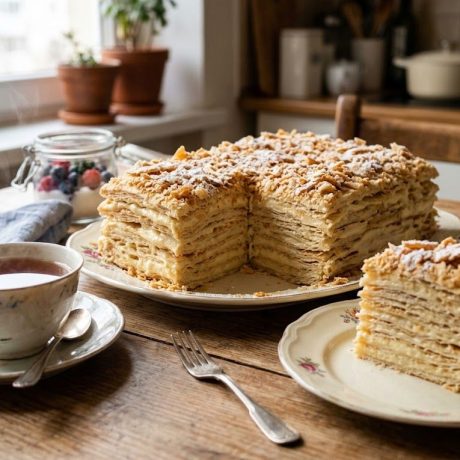
👉 Napoleon is the Russian version of the French mille-feuille and one of the most popular cakes on New Year and birthday tables across the former Soviet Union. Eight or more crisp, flaky pastry layers are stacked with silky vanilla custard and left overnight until the cake becomes soft and…
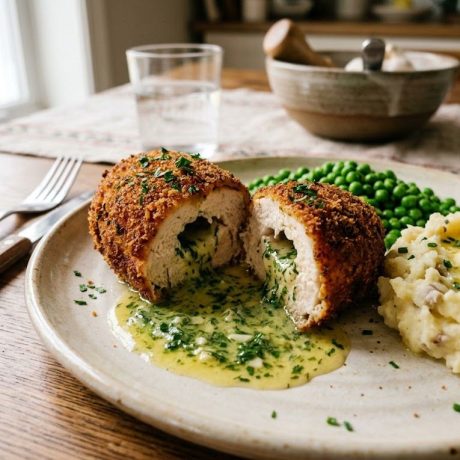
👉 Chicken Kiev (often spelled Chicken Kyiv) is a crispy breaded chicken breast hiding a core of cold herb butter that bursts out when you cut into it. The idea came from French cooking in the Russian Empire, where it was known as “côtelette de volaille”, and the name Kiev…
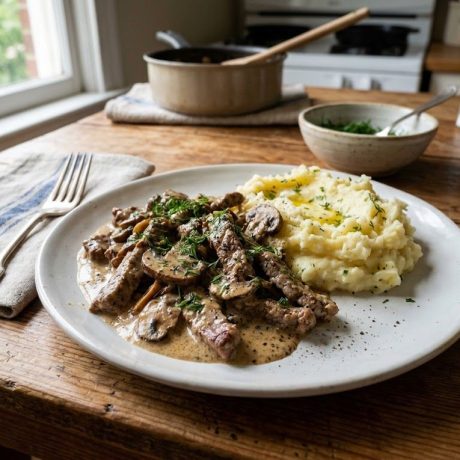
👉 Beef Stroganoff is the most famous Russian dish outside Russia: tender strips of beef quickly seared, then folded into a silky sauce of onion, mushrooms, mustard and sour cream. It is named after the noble Stroganov family of St Petersburg, and the earliest known recipe appears in Elena Molokhovets’s…
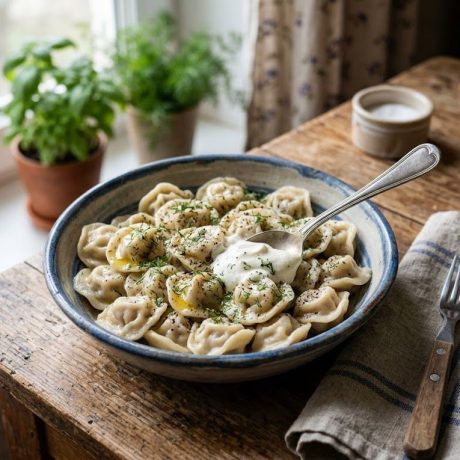
👉 Pelmeni are Russia’s beloved little meat dumplings: thin, tender dough folded around a juicy filling of beef, pork and onion, boiled in salted water and served with sour cream or butter. They come from Siberia and the Ural region, where families once made hundreds at a time and kept…