Pierogi Ruskie – Polish Dumplings with Potato and Cheese
Ingredients:
All-purpose flour
500 Grams
plus extra for rolling
Hot water
250 Milliliters
about, add gradually
Vegetable oil or melted butter
3 Tablespoons
for the dough
Salt
1 Teaspoons
for the dough
Starchy potatoes
500 Grams
peeled
Farmer's cheese (twaróg)
300 Grams
crumbled
Onions
2
medium, finely chopped
Butter
60 Grams
for frying the onions
Black pepper
1 Teaspoons
freshly ground
Salt
1 Teaspoons
for the filling, to taste
Sour cream
to serve
Servings
Preparation mode:
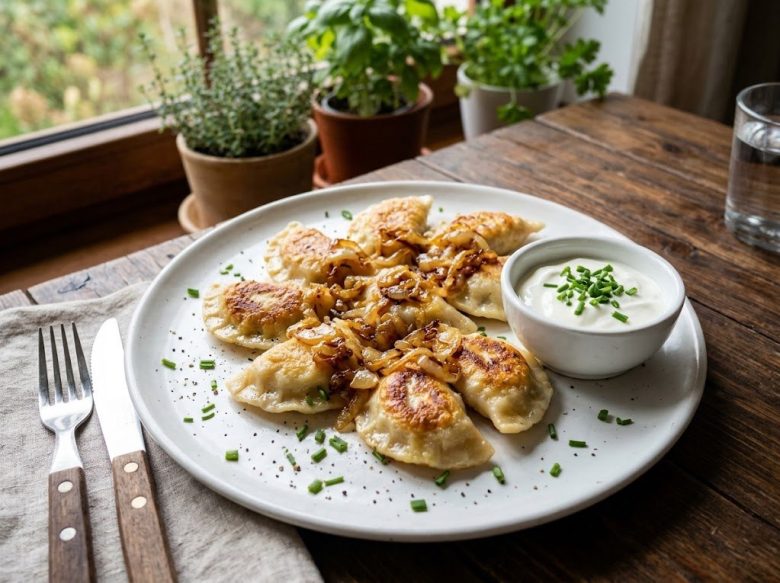
👉 Pierogi ruskie are the most loved dumplings in Poland: soft half-moons of dough filled with mashed potato, crumbly farmer’s cheese and golden fried onion, boiled and then often fried in butter. The name does not mean “Russian” – ruskie refers to Ruthenia, the historic region that today covers western Ukraine and south-eastern Poland, where this filling comes from. Every Polish grandmother makes them, and they are a must at family dinners, milk bars (bary mleczne) and Christmas markets.
How to Make Pierogi Ruskie
Cook the potatoes. Boil the potatoes in salted water until very soft, about 20 minutes. Drain well and mash while hot until completely smooth. Let the mash cool.
Fry the onions. Melt the butter in a pan and fry the onions over medium heat for 10–12 minutes until soft and golden. Keep about a third aside for serving.
Make the filling. Mix the cooled potatoes with the crumbled cheese, two thirds of the onions, pepper and salt. Taste – the filling should be well seasoned.
Make the dough. Mix the flour and salt, add the oil and pour in the hot water little by little, stirring with a spoon, then knead for 6–8 minutes into a smooth, soft dough. Cover and rest for 20–30 minutes.
Roll and cut. Roll the dough thin, about 2 mm, on a floured surface and cut circles with a 7–8 cm glass or cutter. Re-roll the scraps once.
Fill and seal. Put a heaped teaspoon of filling on each circle, fold into a half-moon and pinch the edges firmly together. Keep the finished pierogi under a towel so they do not dry out.
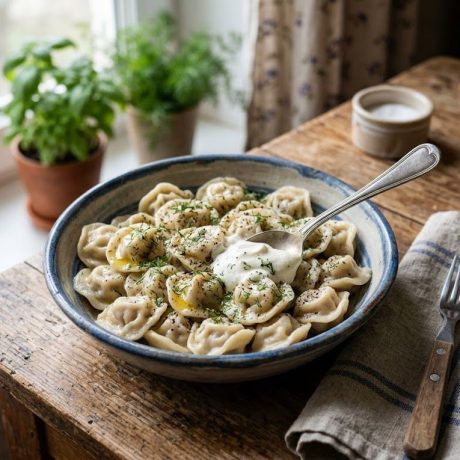
Boil. Cook in batches in a large pot of gently boiling salted water. Stir once so they do not stick. When they float, cook for 1–2 minutes more, then lift out with a slotted spoon.
Serve. Serve hot with the reserved fried onion and sour cream. For a crispy finish, fry the boiled pierogi in butter for 2–3 minutes per side.
Tips for the Best Pierogi Ruskie
Let the filling cool completely – warm filling makes the dough soft and sticky.
Do not overfill: too much filling makes pierogi burst while boiling.
Use hot water for the dough – it makes it soft, stretchy and easy to roll.
FAQ
Are pierogi Polish or Ukrainian? Both countries have very similar dumplings. In Poland they are pierogi, in Ukraine varenyky. Pierogi ruskie (potato and cheese) are a Polish classic named after the old region of Ruthenia.
Can I freeze pierogi? Yes. Freeze them uncooked on a floured tray, then bag them. Boil from frozen for 3–4 minutes after they float.
What is the difference between pierogi and varenyky? They are close cousins. Ukrainian varenyky are often filled with potato and onion only, while pierogi ruskie always include farmer’s cheese.
Cheese: Polish twaróg (farmer's cheese) is traditional. Well-drained cottage cheese or ricotta pressed in a cloth are the closest substitutes.
Makes about 50 pierogi. Leftover filling can be shaped into small patties and fried.