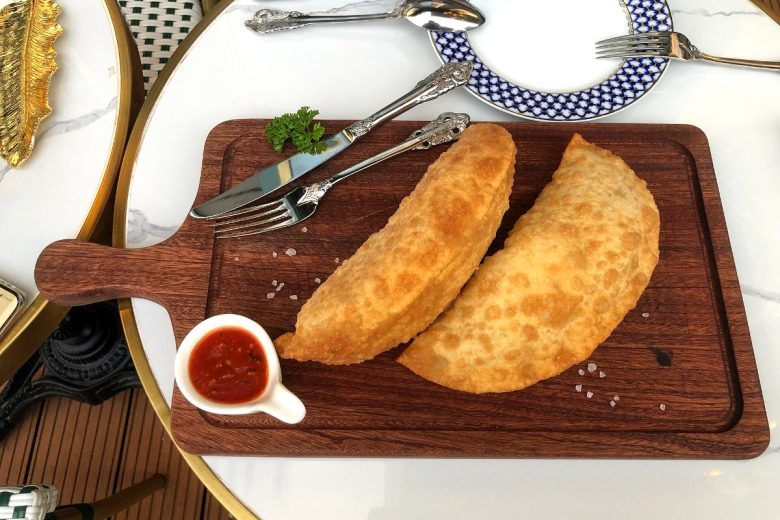
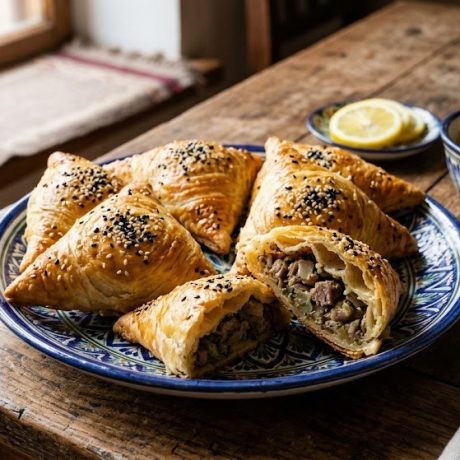
👉 Chebureki (çiberek) are large, thin half-moon pastries filled with juicy spiced meat and fried until bubbly and crisp. They come from Crimean Tatar cuisine and became a favourite street food across Ukraine, Turkey, the Caucasus and Central Asia.
The secret is a very thin dough and a filling with a little water added – it turns into a hot, savoury broth inside every cheburek.
How to Make Chebureki
Make the dough. Mix the flour and salt. Add the warm water, vodka and 2 tbsp oil and knead for 5–7 minutes into a smooth, elastic dough. Cover and rest for 30 minutes.
Make the filling. Mix the meat with the grated onion, herbs, salt and pepper. Add the cold water little by little and mix until the filling is soft and juicy – this water turns into the famous broth inside.
Roll and fill. Divide the dough into 12 pieces. Roll each into a very thin circle about 18 cm (7 in) across. Spread a thin layer of filling over one half, leaving a border.
Seal. Fold over into a half-moon, press out the air and seal the edges firmly with your fingers or a fork. Trim with a pastry wheel for the classic wavy edge.
Fry. Heat about 3 cm (1 in) of oil in a wide pan to 175°C (350°F). Fry the chebureki 1–2 at a time for 2–3 minutes per side until golden and bubbly. Use a thermometer – too hot and the meat stays raw, too cool and they turn greasy.
Drain and serve. Drain on paper towels and serve hot, ideally with a glass of ayran or a light soup.
🇺🇦 What Are Chebureki?
Chebureki (singular cheburek) are large, thin half-moon turnovers filled with raw minced meat and onion and fried until the dough blisters into tiny crispy bubbles. They come from the Crimean Tatars, who call them çiberek, and from Crimea they spread across the whole former Soviet Union. Today you will find them at beach kiosks on the Black Sea, at markets in Georgia and Ukraine, and in special cheburechnaya cafés in Russia and Central Asia.
The magic of a good cheburek is the contrast: a shatteringly thin, crisp shell and a juicy filling that releases hot meat broth when you bite into it – much like Georgian khinkali.
🥟 The Secrets of the Dough
Roll it very thin. The dough should be almost see-through – about 1–2 mm. Thick dough becomes chewy and oily.
Let it rest. At least 30 minutes (or overnight in the fridge) relaxes the gluten so it rolls out easily and does not shrink.
A splash of vodka. Many cooks add a spoonful of vodka to the dough: the alcohol evaporates quickly in the hot oil and creates the famous bubbles.
Seal well. Press out the air and seal the edges firmly with a fork or a pastry wheel so no juice escapes into the oil.
🥩 For a Juicy Filling
Use meat with some fat – lamb, beef or a mix of beef and pork. Grate the onion or chop it very finely, and stir in a few spoonfuls of ice-cold water or broth until the filling is soft and loose. That liquid turns into broth inside the pastry. Season generously with salt, black pepper and a little ground coriander or fresh herbs.
🔥 Frying Tips
Use plenty of neutral oil, at least 2–3 cm deep, heated to about 175–180°C (350°F).
Fry one or two at a time for 2–3 minutes per side, until deep golden.
Drain upright or on a rack so they stay crisp rather than soggy.
🔄 Variations
Cheese chebureki – filled with salty cheese (sulguni, feta or a mix) and herbs.
Potato chebureki – mashed potato with fried onion, a good vegetarian option.
Lamb and herb – the Crimean Tatar classic with lamb, onion and a little fresh dill or parsley.
❓ More Chebureki Questions
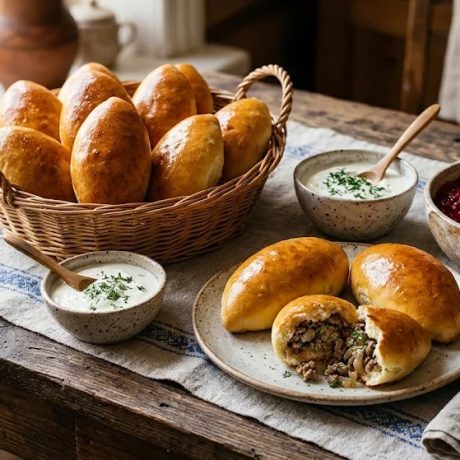
What is the difference between chebureki and pirozhki? Pirozhki are made from soft yeast dough and are usually smaller and thicker; chebureki use thin, unleavened dough and a raw meat filling, so they are much crispier and juicier.
Can I bake chebureki instead of frying? You can bake them at 200°C (400°F) brushed with oil, but they will be more like a pie – the blistered, bubbly crust only comes from frying.
Can I freeze chebureki? Yes. Freeze uncooked chebureki on a floured tray, then bag them. Fry from frozen over slightly lower heat, adding 1–2 minutes per side.
What do you serve with chebureki? In Crimea they are eaten hot with a glass of ayran or cold beer; a fresh tomato and cucumber salad or a spicy ajika also goes very well.
👉 More dough and dumpling favourites: Azerbaijani kutab, tiny dushbara and Ukrainian varenyky.