Cuisines Guide is a small team from Georgia sharing home-style recipes from around the world – from khinkali and khachapuri to Turkish, Polish, Moroccan and Portuguese classics – explained step by step for home cooks.
👉 If you have eaten khachapuri, you have eaten sulguni. This mild, salty, stretchy cheese from Samegrelo in western Georgia is the heart of Georgian cooking: it melts into cheese breads, bubbles on top of baked mushrooms, gets stirred into cornmeal and is sliced on every breakfast and supra table. Here is everything you need to know about sulguni – what it tastes like, how it is made, how to use it and what to buy if you can’t find it.
🧀 What Is Sulguni Cheese?
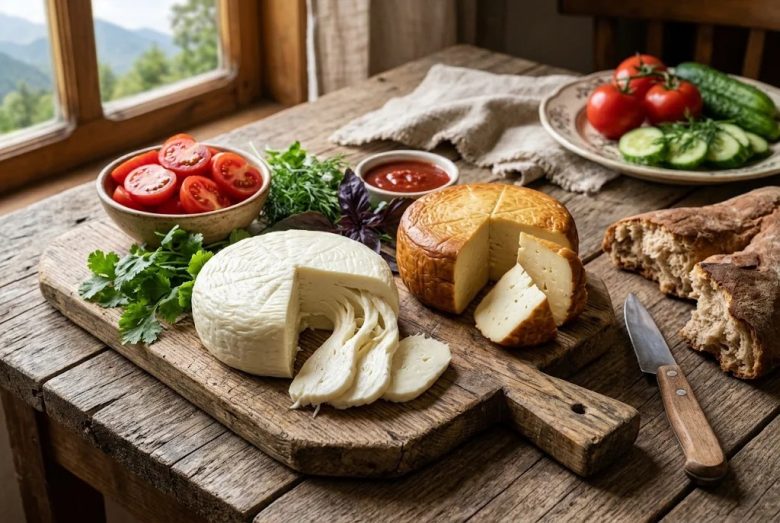
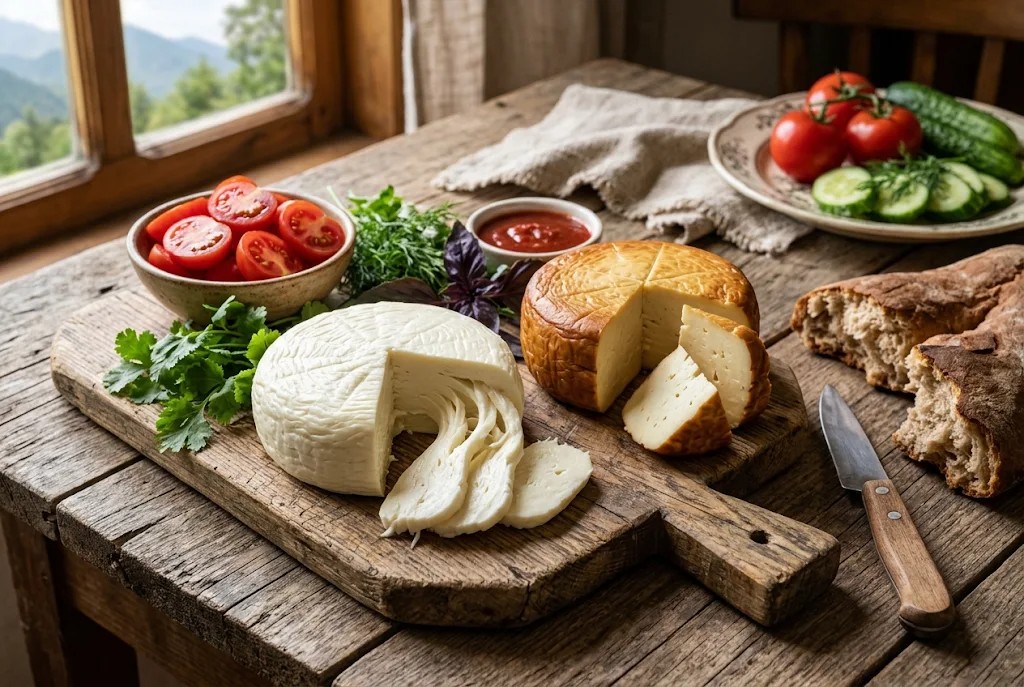
Sulguni (სულგუნი) is a brined, semi-soft cheese traditionally made from cow’s milk, sometimes mixed with buffalo, goat or sheep milk. It comes from Samegrelo (Megrelia), the region on Georgia’s Black Sea side, and has been registered as a Georgian geographical indication. Young sulguni is white to pale cream, elastic and layered – when you tear it, it pulls apart in thin sheets, a little like mozzarella.
😋 What Does Sulguni Taste Like?
Fresh sulguni is mild, milky and pleasantly salty, with a slightly sour, tangy finish from the brine. The texture is springy and moist. When heated it melts beautifully and stretches into long strings, but it keeps more flavour than mozzarella. Older sulguni becomes firmer and saltier.
🏭 How Sulguni Is Made
Milk is curdled with rennet and the young cheese (called imeruli at this stage) is left to sour slightly.
The curd is cut, dipped in hot water and kneaded and stretched by hand until it becomes smooth and elastic – the same “pasta filata” technique used for mozzarella.
It is shaped into flat rounds and placed in brine for a few hours to a few days.
This is why sulguni has its typical layered texture – and why it is often called “Georgian mozzarella”.
🔥 Smoked Sulguni
Shebolili sulguni is smoked over wood until it has a golden-brown rind and a deep smoky flavour. It is wonderful sliced with fresh bread and herbs, grilled on skewers or baked with mushrooms.
🆚 Sulguni vs Imeruli Cheese
Imeruli – a fresh, crumbly, lightly salty young cheese from Imereti. It is not stretched.
Sulguni – made by stretching and kneading the curd, so it is elastic and layered and melts into strings.
Many khachapuri recipes use a mix of both: imeruli for flavour and sulguni for the stretch.
🍽️ Georgian Dishes Made with Sulguni
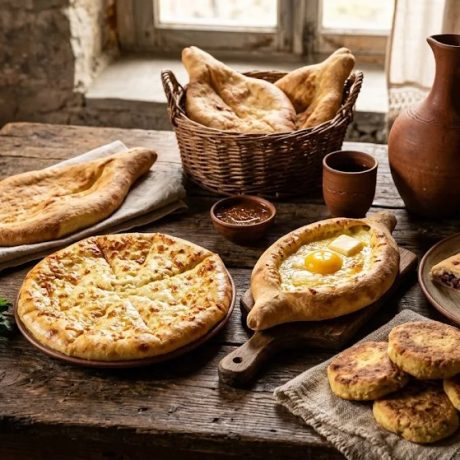
Adjarian khachapuri – the boat-shaped bread with an egg and butter in the middle.
Achma – layered cheese pie, sometimes called Georgian lasagna.
Elarji – cornmeal porridge stirred with lots of sulguni until it stretches.
Chvishtari – cheesy cornbread cakes from Samegrelo.
Gebzhalia – soft cheese rolls with mint in a matsoni sauce.
Soko ketsze – mushrooms baked in a clay dish with melted sulguni.
🛒 Sulguni Substitutes
Outside Georgia and the former Soviet countries, sulguni can be hard to find (look in Russian, Georgian, Turkish or Eastern European shops). Good substitutes:
For melting (khachapuri, elarji): low-moisture mozzarella mixed with feta, about 2:1. The feta adds the salty tang.
For slicing: halloumi, Mexican Oaxaca cheese or Turkish çeçil (string cheese).
Smoked sulguni: smoked scamorza or smoked provolone.
🧊 How to Store Sulguni
Keep sulguni in the fridge in its brine or wrapped tightly in plastic, and eat within 1–2 weeks. If it tastes too salty, soak slices in cold water or milk for 30–60 minutes before using. Grated sulguni freezes well for baking.
❓ FAQ
Is sulguni the same as mozzarella? No, but they are made with a similar stretching technique. Sulguni is saltier, a little sour and firmer, because it is aged in brine.
Can you eat sulguni raw? Yes – fresh sulguni is eaten sliced with bread, tomatoes, cucumbers and herbs, especially for a Georgian breakfast.
What cheese is used in khachapuri? Traditionally imeruli, sulguni or a mix of both. Outside Georgia, a mix of mozzarella and feta works well.