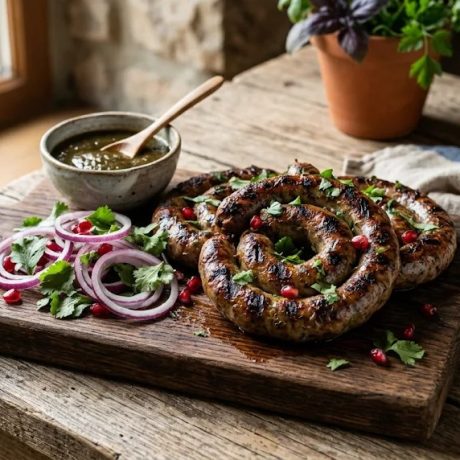
👉 Kupati are Georgia’s homemade sausages: coarse pork mixed with lots of onion, garlic and warm spices like khmeli suneli, coriander, cinnamon and a hint of cloves, stuffed into natural casings, briefly boiled and then fried or grilled until crisp. They come from the western regions of Imereti and Samegrelo,…
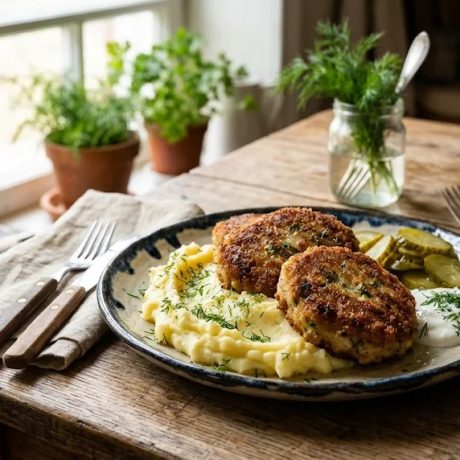
👉 Kotlety are Russia’s favourite everyday dinner: soft, juicy meat cutlets made from minced pork and beef with milk-soaked bread, onion and garlic, coated in breadcrumbs and pan-fried until golden. Every Russian grandmother has her own recipe, and kotlety with mashed potatoes or buckwheat is the taste of childhood for…
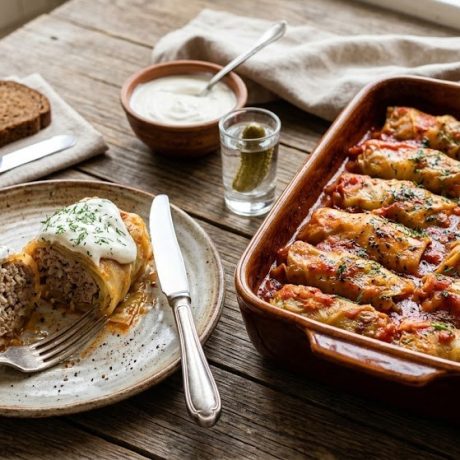
👉 Holubtsi (golubtsi in Russian) are Ukraine’s comforting cabbage rolls: tender cabbage leaves wrapped around a filling of minced meat, rice and sweet fried vegetables, then slowly baked or simmered in a rich tomato sauce. The name comes from holub, “little dove”, because the neat rolls were said to look…
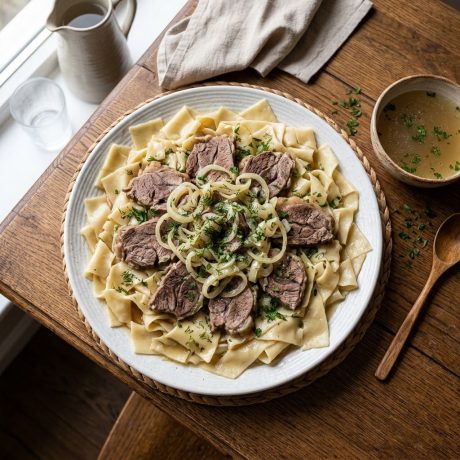
👉 Beshbarmak is the national dish of Kazakhstan and one of the great celebration meals of Central Asia: tender meat slowly boiled on the bone, served over wide, silky homemade noodles and topped with soft onions cooked in the rich broth. The name means “five fingers”, because nomadic families traditionally…
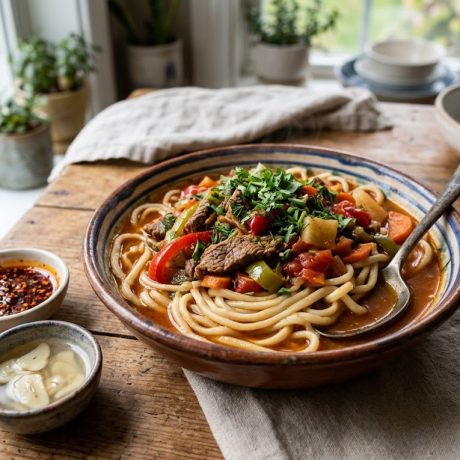
👉 Lagman (also written laghman) is the great noodle dish of Central Asia: long, chewy hand-pulled noodles served with a rich sauce of meat, peppers, tomatoes and vegetables. It came to Uzbekistan, Kyrgyzstan and Kazakhstan with the Uyghur and Dungan people, whose cooks are famous for stretching a single piece…
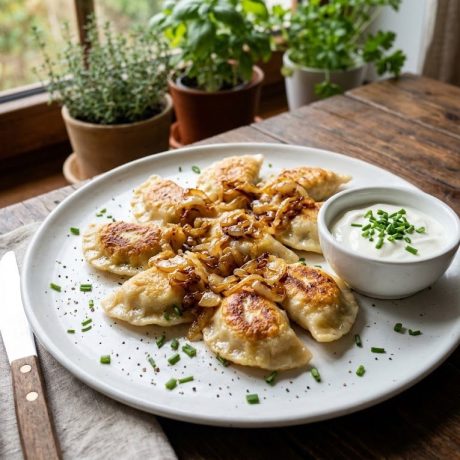
👉 Pierogi ruskie are the most loved dumplings in Poland: soft half-moons of dough filled with mashed potato, crumbly farmer’s cheese and golden fried onion, boiled and then often fried in butter. The name does not mean “Russian” – ruskie refers to Ruthenia, the historic region that today covers western…
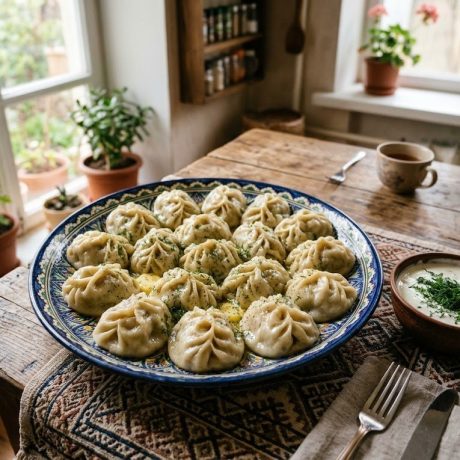
👉 Manti are the big steamed dumplings of Central Asia, loved in Uzbekistan, Kazakhstan, Kyrgyzstan and far beyond. A very thin dough is wrapped around a juicy filling of hand-chopped lamb and plenty of onion, then the dumplings are steamed in a tall multi-level pot called a kaskan until the…
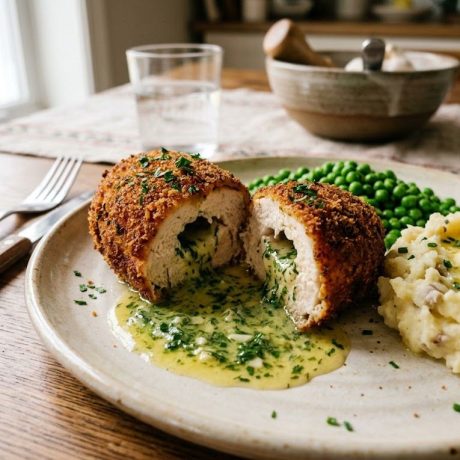
👉 Chicken Kiev (often spelled Chicken Kyiv) is a crispy breaded chicken breast hiding a core of cold herb butter that bursts out when you cut into it. The idea came from French cooking in the Russian Empire, where it was known as “côtelette de volaille”, and the name Kiev…
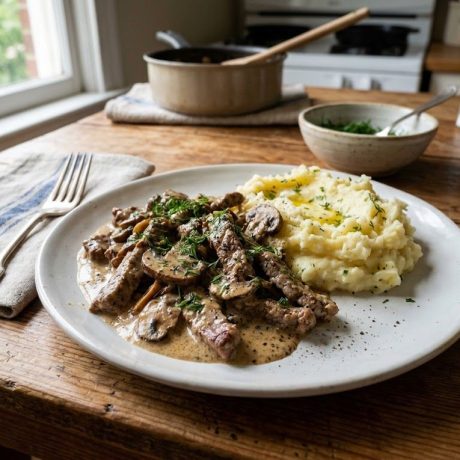
👉 Beef Stroganoff is the most famous Russian dish outside Russia: tender strips of beef quickly seared, then folded into a silky sauce of onion, mushrooms, mustard and sour cream. It is named after the noble Stroganov family of St Petersburg, and the earliest known recipe appears in Elena Molokhovets’s…
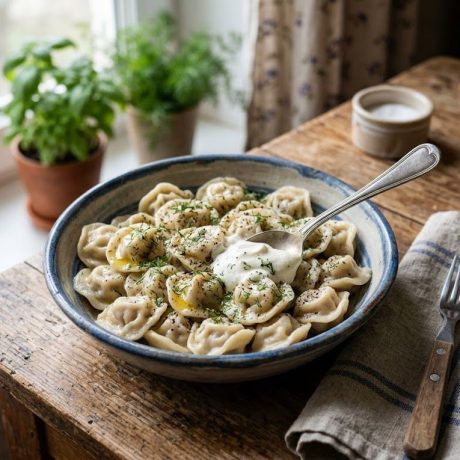
👉 Pelmeni are Russia’s beloved little meat dumplings: thin, tender dough folded around a juicy filling of beef, pork and onion, boiled in salted water and served with sour cream or butter. They come from Siberia and the Ural region, where families once made hundreds at a time and kept…
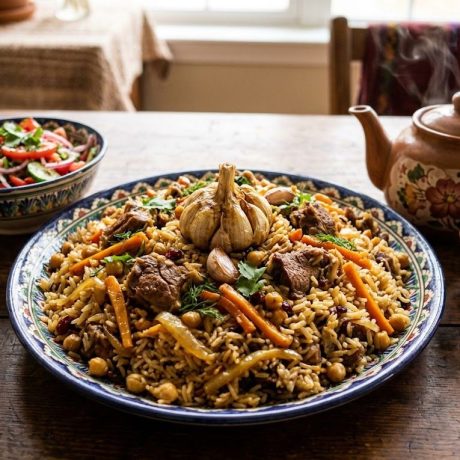
👉 Plov (also called osh or palov) is the national dish of Uzbekistan and the heart of every celebration – so important that in 2016 UNESCO added Uzbek palov culture and tradition to its list of intangible cultural heritage. Pieces of lamb are fried in a heavy pot with onions…
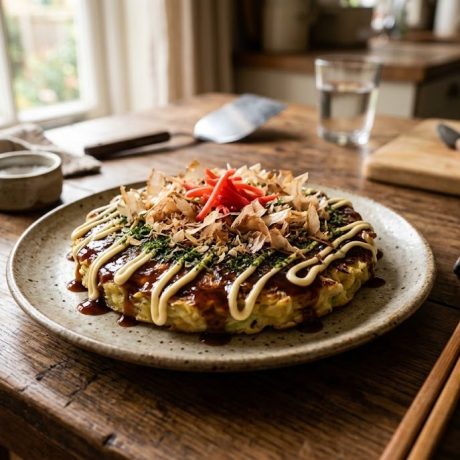
👉 Okonomiyaki (お好み焼き) is a savoury Japanese pancake packed with shredded cabbage, cooked on a hot griddle and covered with sweet-savoury sauce, mayonnaise, bonito flakes and seaweed. The name means “grilled as you like it” – you can add pork, shrimp, squid, cheese or anything you have. It is the…