1 grated for marinating, 2 sliced into rings to serve
Salt
1 Tablespoons
coarse
Black pepper
1 Teaspoons
freshly ground
Pomegranate seeds or juice
to serve
Fresh herbs (cilantro, tarragon, basil)
to serve
Servings
Preparation mode:
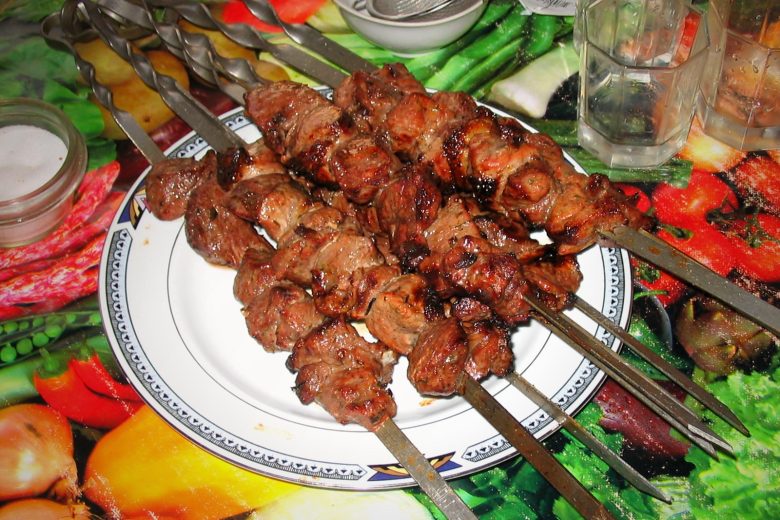
👉 Mtsvadi is the Georgian version of shashlik – juicy chunks of pork grilled on skewers over glowing coals. Georgians keep it simple: good meat, salt, fire and a sprinkle of pomegranate and raw onion at the end.
🇬🇪 What Is Mtsvadi?
Mtsvadi (მწვადი) means “grilled” and is the centerpiece of any Georgian outdoor feast. The most traditional way is to cook it over dried grapevine branches (vazis chechkhi), which give a sweet, smoky flavor. Pork neck is the classic choice because its fat keeps the meat juicy.
🍳 How to Make Mtsvadi
1. Season the meat. Mix the pork with the grated onion, salt and black pepper. Cover and leave for 1–2 hours (or overnight in the fridge)
2. Prepare the fire. Light the grill and let the wood or charcoal burn down to hot, glowing coals with no flames
3. Skewer. Thread the meat tightly onto skewers, removing the grated onion
4. Grill. Grill for 15–20 minutes, turning regularly, until browned outside and juicy inside. If flames flare up, sprinkle with a little water or wine
5. Serve. Slide the meat onto a platter, scatter with onion rings, pomegranate seeds and fresh herbs
😋 Why You’ll Love Mtsvadi
Smoky, juicy and simple – mtsvadi lets the quality of the meat speak, and it brings everyone around the grill.
💡 Tips for the Best Mtsvadi
Use fatty pork neck for the juiciest skewers.
Grill over coals, not flames.
Don’t marinate in vinegar – it toughens the meat.
Vine branches give the most authentic flavor.
🍽️ How to Serve Mtsvadi
Serve with tkemali sauce, fresh vegetables, herbs and Georgian bread. A glass of Saperavi wine is the classic match.
❓ Mtsvadi FAQ
What is the difference between mtsvadi and shashlik?
They are very similar; mtsvadi is the Georgian name and is usually seasoned only with salt and pepper.
Can I make mtsvadi with lamb or beef?
Yes – lamb and veal mtsvadi are also popular.
Shashlik is the name used across Russia, Ukraine, the Caucasus and Central Asia for meat grilled on skewers over charcoal. Mtsvadi is the Georgian word for it, and Georgians keep it very simple: good pork (or veal), salt, pepper and onion – often no marinade at all – grilled over vine-wood embers and served with raw onion and pomegranate seeds.
Georgian mtsvadi – pork neck, salt and pepper, grilled over grapevine cuttings; served with onion, pomegranate and tkemali.
Russian shashlik – pork marinated overnight with lots of onion, vinegar or kefir and black pepper.
Uzbek shashlik – lamb with cumin and coriander, often with pieces of lamb tail fat between the meat, served with sliced onion and vinegar.
Armenian khorovats – pork or lamb with grilled peppers, tomatoes and eggplant.
🧂 3 Easy Shashlik Marinades
Classic onion: 1 kg meat + 3 grated onions, 1 tsp salt, 1 tsp black pepper. Marinate 4–12 hours – the onion juice makes the meat tender.
Kefir or yogurt: 1 kg meat + 300 ml kefir, 2 sliced onions, salt, pepper and a pinch of coriander. Very tender, great for chicken.
Pomegranate: 1 kg meat + 150 ml pomegranate juice, 2 sliced onions, salt, pepper and a little dried savory – a Georgian favourite.
🔥 No Grill? Oven and Pan Methods
Oven: thread the meat on skewers, rest them across a deep baking tray and roast at 230°C (450°F) for 20–25 minutes, turning once. Finish under the grill for 3 minutes for colour.
Grill pan: cook the pieces over high heat for 10–12 minutes, turning every 2–3 minutes.
Air fryer: 200°C (400°F) for 12–15 minutes, shaking halfway.
❓ More Shashlik Questions
What is the best meat for shashlik? Pork neck (shoulder) is the classic choice because its fat keeps it juicy. Lamb shoulder, chicken thighs and beef sirloin are also great.
How long should shashlik marinate? At least 4 hours, ideally overnight in the fridge. Georgian mtsvadi made from very fresh meat is often grilled with only salt and pepper.
What do you serve with shashlik? Thin lavash or Georgian bread, raw onion with sumac or vinegar, fresh herbs, tomatoes and cucumbers, and a sour sauce such as tkemali or ajika.