Russian New Year Menu: 15 Classic Dishes for the Holiday Table
30October2026
Cuisines Guide Team
Cuisines Guide is a small team from Georgia sharing home-style recipes from around the world – from khinkali and khachapuri to Turkish, Polish, Moroccan and Portuguese classics – explained step by step for home cooks.
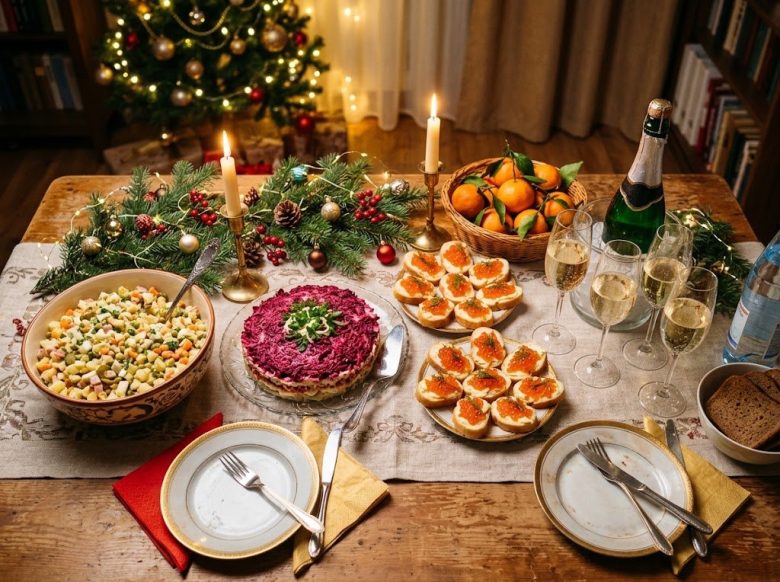
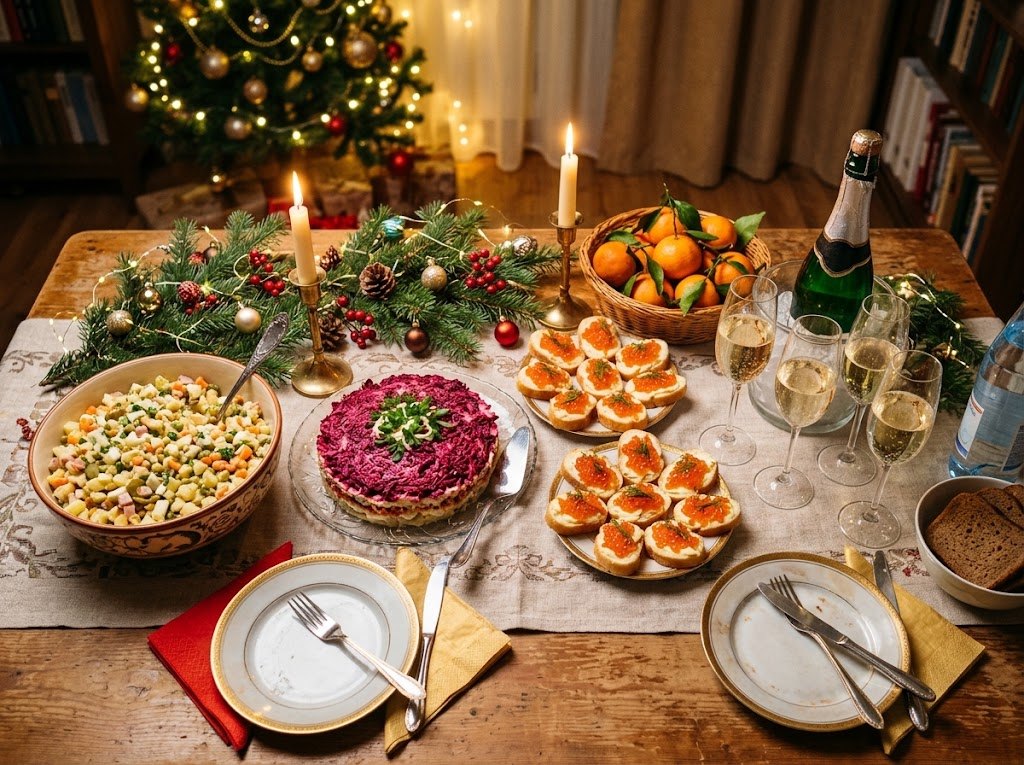
👉 In Russia and much of the former Soviet Union, New Year’s Eve is the biggest celebration of the year – bigger than Christmas, which comes later, on January 7th. The table is laid with salads, cold appetizers, a hot main course and festive cakes, the TV plays the same beloved film every year, and everyone waits for the chimes of midnight with a glass of sparkling wine. Here is a classic Russian New Year menu – the dishes that appear on almost every table, and how to cook them at home.
🥗 The Salads
1. Olivier Salad
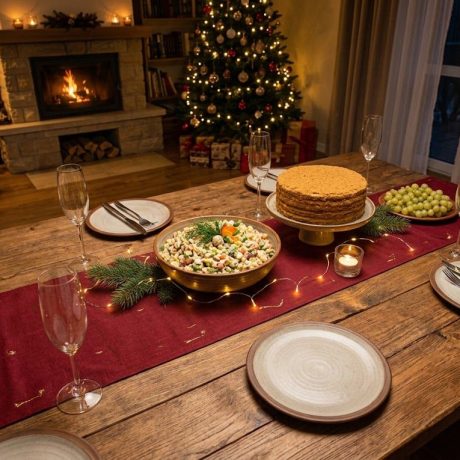
The undisputed king of the New Year table: small cubes of potato, carrot, egg, ham or chicken, pickles and peas in mayonnaise. Families make it in huge bowls and eat it for days. 👉 Olivier salad recipe
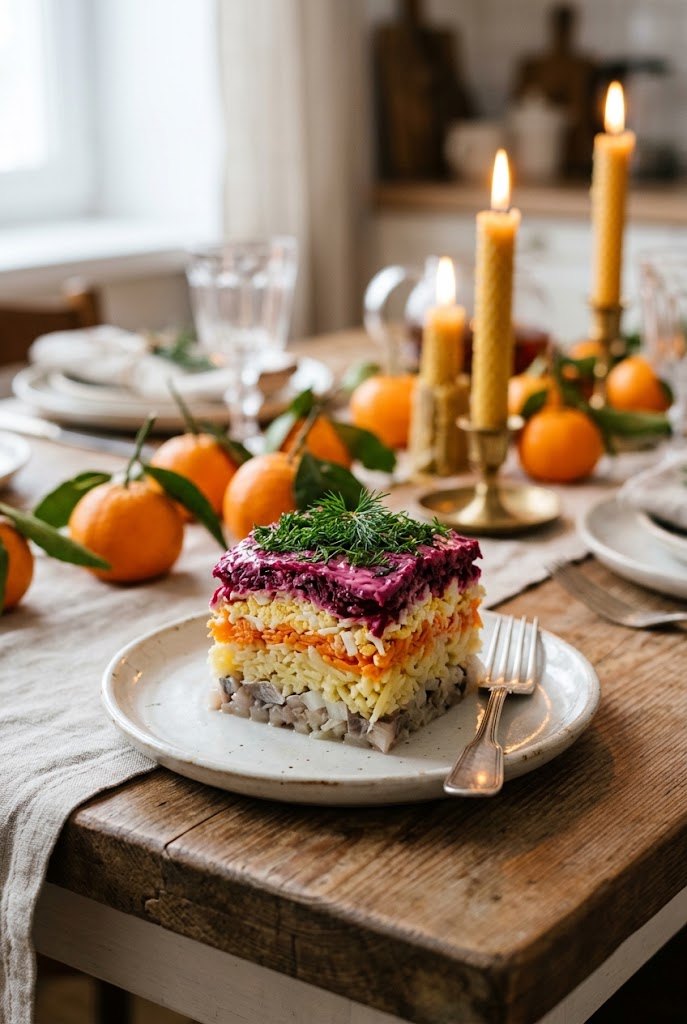
2. Herring Under a Fur Coat (Shuba)
Layers of salted herring, potato, carrot, egg and bright purple beets – the most colourful dish on the table. 👉 Shuba salad recipe
3. Mimosa Salad
Another layered salad made with canned fish, potato, carrot, onion and grated egg yolk on top, which looks like yellow mimosa flowers.
4. Vinegret
A lighter salad of diced beets, potatoes, carrots, sauerkraut, pickles and peas dressed with sunflower oil – no mayonnaise at all.
🍞 Cold Appetizers (Zakuski)
Red caviar sandwiches – slices of baguette with butter and salmon roe, a symbol of a rich New Year.
Kholodets – meat in clear jelly (aspic), served cold with sharp mustard or horseradish.
Pickles and marinated mushrooms – homemade cucumbers, tomatoes and forest mushrooms from the summer.
Salted herring with onion rings and boiled potatoes.
Stuffed eggs, cheese and cold cuts.
🍗 The Hot Main Course
After midnight, the hot dish comes out. Popular choices are a roast chicken or duck with apples, baked pork, or Russian classics such as:
Homemade pelmeni, often made by the whole family on December 31st
Plov or manti in families with Central Asian roots
🍰 Cakes and Sweets
Medovik – the soft honey layer cake with sour cream frosting.
Napoleon – flaky pastry layers with vanilla custard.
Mandarins – the smell of the New Year in every Soviet childhood memory.
Chocolates and candies in the children’s New Year gift boxes.
🎄 New Year Traditions
The yolka – the decorated New Year tree, put up in late December and kept until mid-January.
Ded Moroz and Snegurochka – Grandfather Frost and his granddaughter the Snow Maiden bring presents on New Year’s Eve.
The Kremlin chimes – at midnight everyone raises a glass while the bells of the Spasskaya Tower ring twelve times.
Making a wish – some people write a wish on a small piece of paper, burn it, drop the ashes into their glass and drink it before the last chime ends.
Old New Year – many families celebrate again on the night of January 13th–14th, following the old Julian calendar.
📋 Easy Plan for Your Russian New Year Table
2 days before: bake the medovik or Napoleon cake – both need a night in the fridge.
1 day before: boil the vegetables and eggs, assemble the shuba, make and freeze pelmeni.
December 31st, afternoon: dice and dress the Olivier salad, prepare zakuski.
Evening: cook the hot dish, chill the sparkling wine, and peel the mandarins.
❓ FAQ
What is the most traditional Russian New Year food? Olivier salad, herring under a fur coat, red caviar sandwiches, mandarins and sparkling wine are the classic symbols of the New Year table.
Why is New Year more important than Christmas in Russia? In Soviet times religious holidays were discouraged, so many Christmas traditions – the tree, Grandfather Frost and gifts – moved to New Year. Orthodox Christmas is celebrated on January 7th.
Can I make the salads ahead? Yes – shuba is best made a day ahead; for Olivier, prepare the ingredients ahead and add the mayonnaise a few hours before serving.