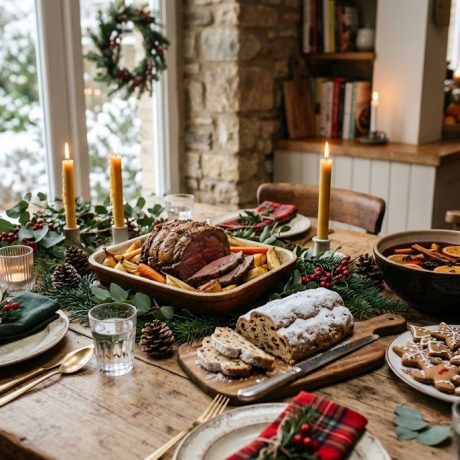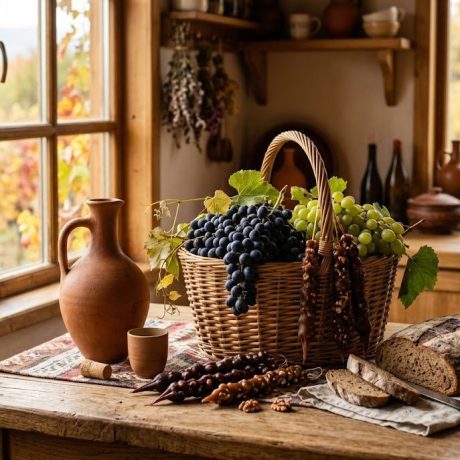

👉 At midnight on December 31st, people all over the world eat something special – not only because it tastes good, but because they believe it will bring luck, money, health or a long life in the year ahead. Some traditions are about round shapes that look like coins, some about long noodles that stand for a long life, and some are simply about gathering the whole family around one big table. Here are 15 New Year foods from around the world, what they mean, and which ones you can cook at home this year.
🇪🇸 1. Spain – Twelve Grapes at Midnight
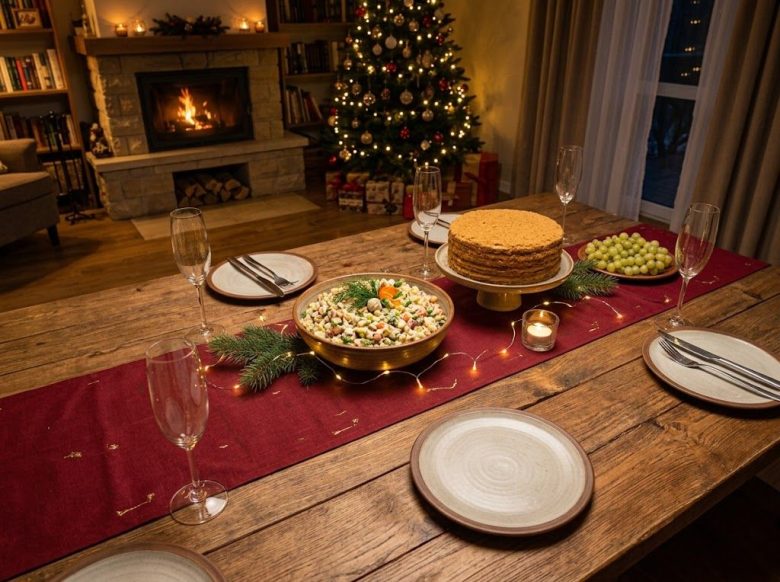
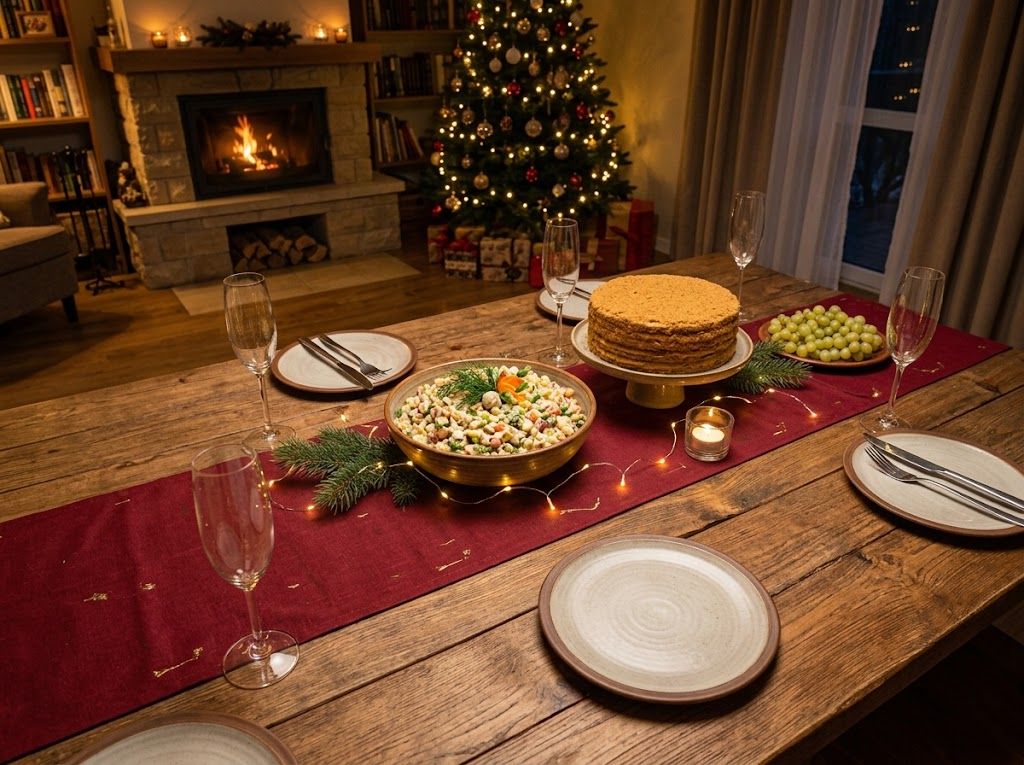
In Spain, people eat las doce uvas de la suerte – the twelve grapes of luck – one with each stroke of the clock at midnight. Each grape stands for one month of the coming year, and if you manage to finish them all before the last bell, the year will be lucky. It sounds easy, but with the whole family laughing and the bells ringing fast, it rarely is! Many people buy small seedless grapes or ready-peeled cans just for the night.
🇷🇺 2. Russia and the Former Soviet Union – Olivier Salad
From Moscow to Kyiv, Tbilisi and Almaty, the New Year table is not complete without a big bowl of Olivier salad: tiny cubes of boiled potato, carrot, egg, ham or chicken, pickles and green peas in mayonnaise. Next to it you will usually find “herring under a fur coat” – layers of salted herring, potato, carrot and beet – and a bottle of sparkling wine opened as the president’s speech ends.
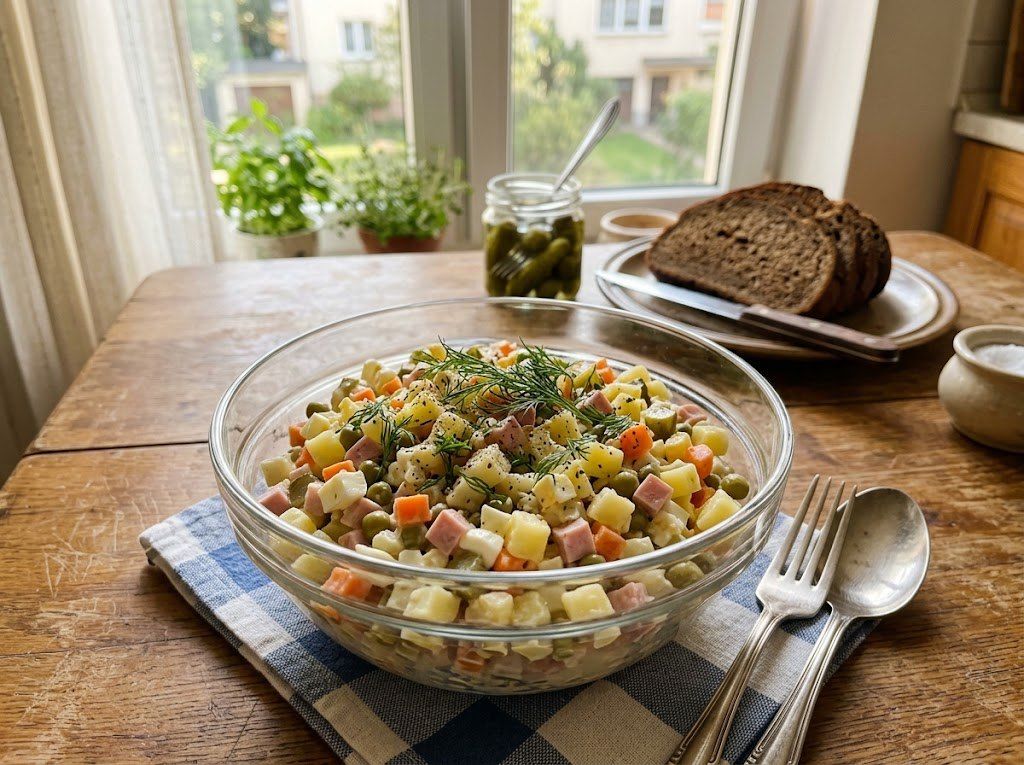
Make it at home: our classic Olivier salad recipe can be prepared a day ahead.
🇯🇵 3. Japan – Toshikoshi Soba and Osechi
On New Year’s Eve, Japanese families eat toshikoshi soba – “year-crossing noodles”. The long buckwheat noodles stand for a long life, and because they break easily, they also symbolise letting go of the hardships of the old year. On New Year’s Day comes osechi ryōri, beautiful lacquered boxes filled with small dishes, each with a meaning: black beans for health, herring roe for many children, and sweet rolled omelette for learning.
🇮🇹 4. Italy – Lentils and Cotechino
Italians eat lenticchie (lentils) after midnight, because the little round seeds look like coins – the more you eat, the more money you will have. They are served with cotechino or zampone, rich pork sausages that stand for abundance.
Lentils from other cuisines: Turkish mercimek çorbası and Middle Eastern mujadara are delicious ways to eat your “lucky coins”.
🇬🇷 5. Greece – Vasilopita
The Greek New Year cake vasilopita is baked with a coin hidden inside. At midnight or on New Year’s Day, the head of the family cuts it: the first slices go to Christ, the house and the poor, then one for each family member from oldest to youngest. Whoever finds the coin will be lucky all year.
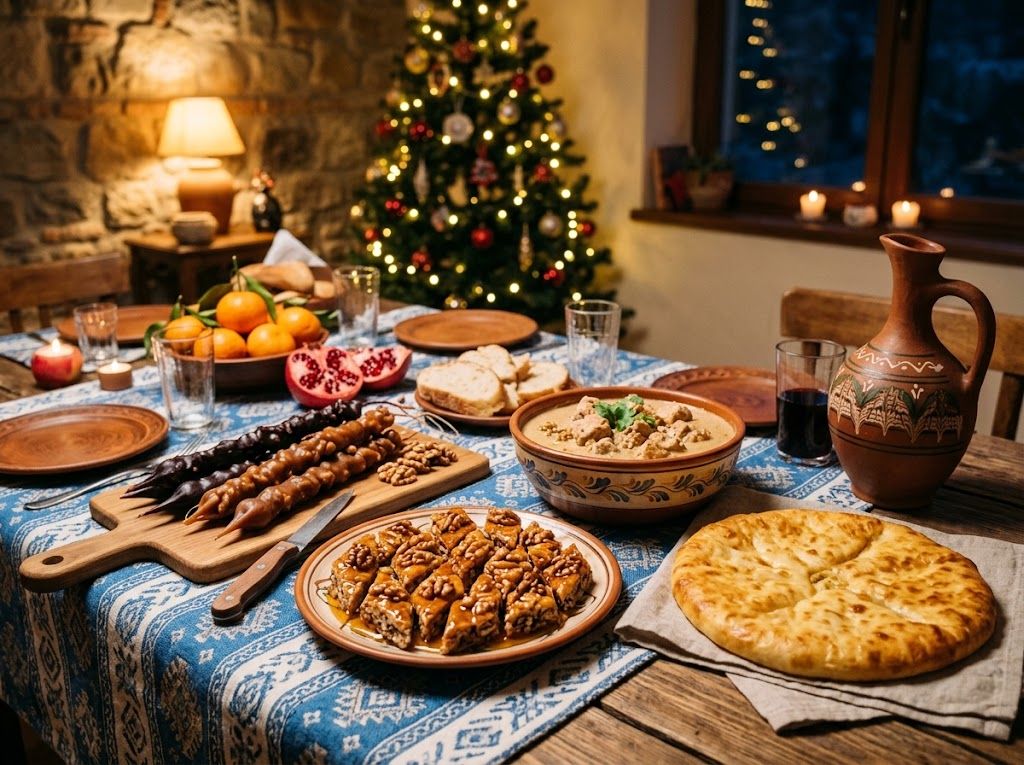
🇬🇪 6. Georgia – Gozinaki, Satsivi and the Supra
Georgian New Year (Akhali Tseli) is celebrated with a huge supra feast. Two foods are a must: gozinaki, crunchy diamonds of walnuts cooked in honey, and satsivi, turkey or chicken in a creamy walnut sauce with spices. The table also has churchkhela, pomegranates, khachapuri and a branched chichilaki – the traditional Georgian New Year tree made of shaved hazelnut wood. The first guest to enter the house after midnight, the mekvle, is believed to bring the luck of the whole year.
🇺🇸 7. Southern United States – Black-Eyed Peas and Greens
In the American South, New Year’s Day lunch means Hoppin’ John (black-eyed peas cooked with rice and pork), collard greens and cornbread. The peas stand for coins, the greens for paper money and the golden cornbread for gold.
🇳🇱 8. Netherlands – Oliebollen
On New Year’s Eve, stalls all over the Netherlands sell oliebollen – “oil balls”: deep-fried doughnut balls, often with raisins, dusted heavily with powdered sugar. Families also fry them at home and eat them warm while waiting for the fireworks.
More Dutch sweets: try homemade stroopwafels.
🇵🇭 9. Philippines – Twelve Round Fruits
In the Philippines, the table is set with twelve different round fruits – grapes, oranges, melons, apples and more – one for each month. Round shapes stand for coins and prosperity, and many people also wear polka dots on New Year’s Eve for the same reason.
🇵🇱 10. Poland – Herring at Midnight
In Poland and much of Scandinavia, eating pickled herring at midnight is said to bring a year of plenty, because the fish’s silver skin looks like money. It is often served in cream with onion and apple, alongside hearty dishes like bigos.
🇳🇴 11. Norway and Denmark – Kransekake
The tall ring cake kransekake (in Danish kransekage) is made from 18 or more rings of almond dough stacked into a tower and decorated with icing and little flags. It is the classic sweet at midnight in Denmark and Norway, served with champagne.
🏴 12. Scotland – Hogmanay and Black Bun
Scots celebrate Hogmanay with black bun, a very rich fruit cake baked inside a pastry case, and shortbread. After midnight, the first person to cross the threshold – the “first-footer” – should bring gifts such as coal, salt, shortbread or whisky for good luck. Sounds familiar? Georgia’s mekvle tradition is remarkably similar.
🇲🇽 13. Mexico – Tamales, Bacalao and Grapes
Mexican families welcome the New Year with tamales, pozole and, in many homes, bacalao a la vizcaína – salt cod stewed with tomatoes, olives and peppers. Like in Spain, many people also eat twelve grapes at midnight, making a wish with each one.
🇧🇷 14. Brazil – Lentils and Pomegranate Seeds
In Brazil, people eat lentils for prosperity and keep pomegranate seeds in their wallets for money. On the beaches of Rio de Janeiro, millions dressed in white jump over seven waves at midnight, making a wish for each one.
🇨🇳 15. China – Dumplings for Lunar New Year
China celebrates its main New Year later, in January or February, following the lunar calendar. In the north, families fold jiaozi dumplings together on New Year’s Eve – their shape resembles old gold ingots, so they stand for wealth. Long noodles for long life and a whole fish (because “fish” sounds like “surplus”) are also on the table.
👉 Love dumplings? See dumplings around the world, from Georgian khinkali to Ukrainian varenyky.
🧭 What New Year Foods Have in Common
- Round foods mean money. Grapes, lentils, black-eyed peas, round fruits and coin-shaped sweets all stand for coins and prosperity.
- Long foods mean long life. Japanese soba and Chinese noodles are never cut short.
- Hidden coins bring luck. From Greek vasilopita to many European cakes, finding the coin is a highlight of the night.
- The first guest matters. The Georgian mekvle and the Scottish “first-footer” both carry the luck of the year into the house.
- Sweetness for a sweet year. Honey, nuts and sugar – like Georgian gozinaki – appear on New Year tables almost everywhere.
❓ FAQ
What food is lucky to eat on New Year’s Eve?
The most common lucky foods are grapes (Spain, Mexico), lentils (Italy, Brazil), black-eyed peas (southern US), long noodles (Japan, China), herring (Poland, Scandinavia) and anything round, which stands for coins.
Why do Spanish people eat 12 grapes?
Each grape represents one month of the new year. Eating all twelve with the twelve chimes of midnight is said to bring luck for the whole year.
What is the traditional New Year food in Russia?
Olivier salad is the best-known, together with herring under a fur coat, mandarins, caviar sandwiches and sparkling wine.
What do Georgians eat for New Year?
Gozinaki (walnut and honey candy) and satsivi (poultry in walnut sauce) are the two essential dishes, served at a large supra with khachapuri, churchkhela and wine.
👉 Hungry for more holiday food? Read Christmas foods around the world, explore traditional Georgian food, or browse the blog.