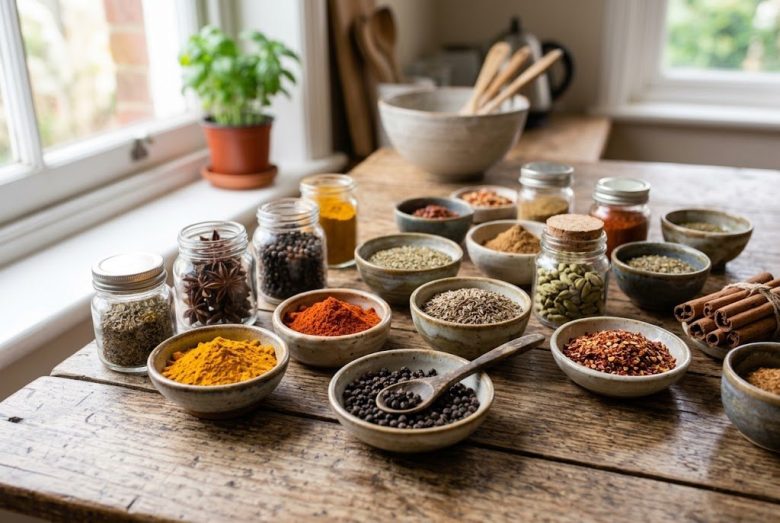

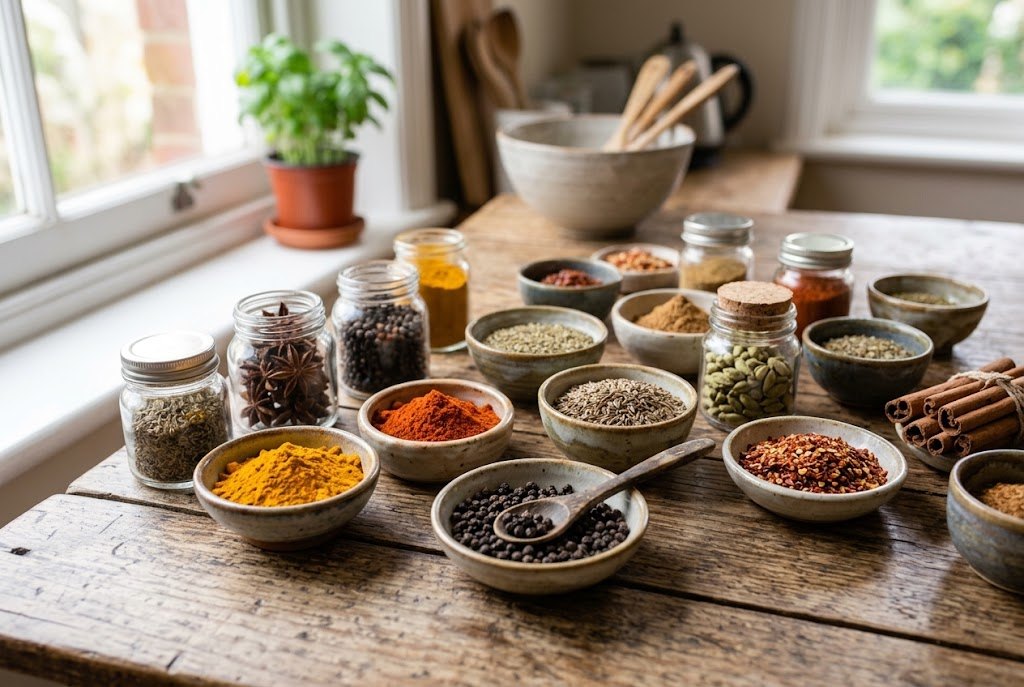
👉 Spices are the fastest way to travel without leaving your kitchen. A pinch of cumin takes a pot of chickpeas to India, sumac turns a salad Lebanese, and a spoon of khmeli suneli makes any stew taste like Georgia. Here are 20 essential spices from around the world – what they taste like, where they come from, and which dishes to use them in – plus simple tips to get the most flavour out of every jar.
🌍 The Everyday Essentials
1. Cumin
Taste: warm, earthy, slightly smoky. Used in: India, Mexico, the Middle East and North Africa. Cumin is the backbone of curries, chili, falafel and lentil soups. Toast whole seeds in oil at the start of cooking to release their aroma.
👉 Try it in chana masala and Turkish mercimek çorbası.
2. Paprika
Taste: sweet, mild, sometimes smoky. Used in: Hungary, Spain and North Africa. Sweet paprika gives colour and gentle warmth; smoked Spanish pimentón adds a barbecue note. Fry it briefly in oil – but not too long, or it turns bitter.
👉 Try it in shakshuka and Spanish patatas bravas.
3. Turmeric
Taste: earthy, slightly bitter, with a bright yellow colour. Used in: India and Southeast Asia. A little goes a long way – it colours rice, curries and soups. Careful: it stains wooden spoons and countertops.
4. Black Pepper
Taste: sharp and woody. Used in: everywhere – but it originally came from India’s Malabar coast and was once worth its weight in silver. Always grind it fresh. 👉 It is the star of Roman cacio e pepe.
5. Cinnamon
Taste: sweet and warm. Used in: desserts in Europe and America, but also in savoury dishes across the Middle East, North Africa and India – in pilafs, tagines and meat stews.
🇬🇪 The Spices of Georgia
6. Khmeli Suneli
Georgia’s famous spice blend, usually made with dried coriander, blue fenugreek, dill, savory, marigold, bay leaf and chili. It tastes herbal, nutty and warm. It is used in almost every Georgian stew and in walnut sauces.
👉 Try it in chakhokhbili and kharcho.
7. Utskho Suneli (Blue Fenugreek)
A milder, nuttier cousin of regular fenugreek, grown in the Caucasus. It gives Georgian dishes their unique, slightly sweet aroma – especially satsivi and badrijani.
8. Svanetian Salt
Salt ground with garlic, dried coriander, blue fenugreek, chili, dill and caraway, from the mountain region of Svaneti. Sprinkle it on tomatoes, grilled meat or boiled potatoes. 👉 It seasons the meat filling of kubdari.
🕌 Middle East and North Africa
9. Sumac
Taste: tangy and lemony, with a deep red colour. Made from dried berries, it adds sourness without liquid. 👉 Essential in fattoush, and sprinkled on onions for lahmacun.
10. Za’atar
A Levantine mix of wild thyme, sumac and toasted sesame seeds. Mix it with olive oil and spread it on warm flatbread for breakfast.
11. Ras el Hanout
Morocco’s “head of the shop” blend – the best spices the merchant has, often 10–20 of them, including cumin, ginger, cinnamon, cardamom and rose petals. 👉 Use a pinch in harira or with fish.
12. Saffron
The world’s most expensive spice: the red threads of the crocus flower, picked by hand. A few threads soaked in warm water give rice a golden colour and a honey-like aroma. 👉 Used in Persian rice dishes and Indian biryani.
🍛 India and South Asia
13. Cardamom
Green pods with a floral, minty, citrus flavour. Used in masala chai, biryanis, curries and Scandinavian sweet buns. Crush the pods lightly before using.
14. Garam Masala
A warm North Indian blend, often cinnamon, cardamom, cloves, cumin, coriander and black pepper. Unlike most spices, it is usually added at the end of cooking. 👉 Try it in butter chicken.
15. Coriander Seeds
Citrusy and mild – nothing like the fresh cilantro leaves. Ground coriander is used in curries, Georgian dishes and spice rubs. Toast and grind it yourself for the best flavour.
16. Mustard Seeds
Tiny black or yellow seeds that pop in hot oil and turn nutty. A key first step in many South Indian dishes and pickles.
🥢 East Asia and the Caribbean
17. Star Anise
A beautiful star-shaped pod with a sweet licorice flavour. It is one of the main spices in the broth of Vietnamese phở and in Chinese braises.
18. Sichuan Pepper
Not really pepper, but the husk of a berry that makes your lips tingle and go numb – the famous má of Sichuan cooking. 👉 Add a pinch to kung pao chicken.
19. Allspice
Called pimento in Jamaica, it tastes like cinnamon, clove and nutmeg in one. It is the heart of Jamaican jerk seasoning and stews like brown stew chicken.
20. Chili Flakes and Chilies
From Turkish pul biber and Korean gochugaru to Mexican guajillo and Georgian ajika, dried chilies bring heat, colour and fruitiness. 👉 Try mild guajillo in chilaquiles rojos or spicy Georgian ajika.
🔥 How to Get the Most Flavour From Spices
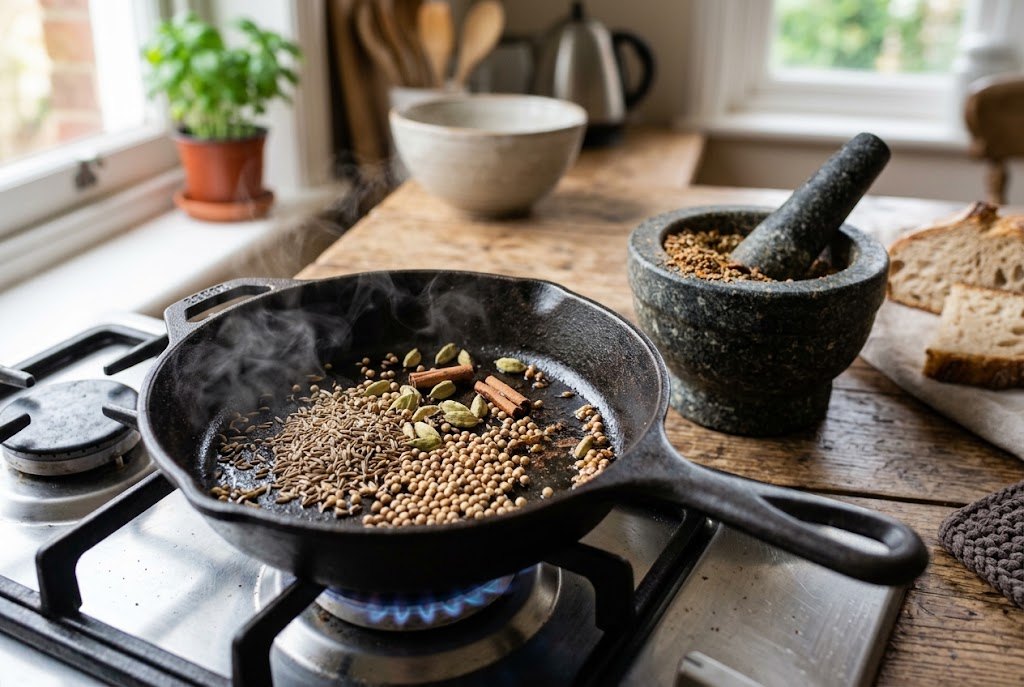
- Toast whole spices. Heat them in a dry pan for 1–2 minutes, shaking, until fragrant. Then grind them in a mortar or spice grinder.
- Bloom them in fat. Many dishes start by frying spices in hot oil or butter for 30–60 seconds. Fat carries flavour much better than water.
- Add some at the end. Delicate blends like garam masala and fresh herbs taste best added just before serving.
- Buy whole when you can. Whole spices keep their flavour for 2–3 years; ground spices fade after 6–12 months.
- Store them well. Keep spices in airtight jars, away from heat, light and steam – not above the stove.
- Do the sniff test. If a spice has almost no smell when you open the jar, it has lost its flavour.
❓ FAQ
What are the most essential spices to have at home?
A good starter set is cumin, paprika, black pepper, cinnamon, turmeric, chili flakes, coriander and one blend you love, such as garam masala or khmeli suneli.
What is the most expensive spice in the world?
Saffron. It takes tens of thousands of hand-picked flowers to make a single pound.
How long do spices last?
Whole spices keep their flavour for about 2–3 years; ground spices are best within 6–12 months.
What is khmeli suneli?
A Georgian spice blend of dried herbs and spices, usually including coriander, blue fenugreek, dill, savory and marigold. It is used in stews, soups and walnut sauces.
👉 Put your spices to work: browse our food guides, or start with 15 street foods from around the world.