Rtveli: The Georgian Grape Harvest – Wine, Churchkhela and Harvest Food
14October2026
Cuisines Guide Team
Cuisines Guide is a small team from Georgia sharing home-style recipes from around the world – from khinkali and khachapuri to Turkish, Polish, Moroccan and Portuguese classics – explained step by step for home cooks.
👉 Every autumn, from mid-September to the end of October, villages across Georgia smell of crushed grapes, woodsmoke and boiling grape must. This is rtveli (რთველი) – the grape harvest – one of the oldest food traditions in the world. Families, neighbours and friends gather to pick grapes by hand, press them, pour the juice into clay vessels buried in the ground, and celebrate with long tables of food. Here is what happens during rtveli, why Georgia is called the cradle of wine, and the dishes and sweets that are made only at this time of year.
🍇 8,000 Years of Wine
Archaeologists have found grape seeds and wine residue in clay jars in southern Georgia that are about 8,000 years old – among the oldest evidence of winemaking anywhere. Many Georgians will tell you, half joking, that their country invented wine.
The traditional method has barely changed. Grapes are crushed in a wooden or stone press called a satsnakheli, and the juice – often with skins, stems and seeds – goes into a qvevri, a huge egg-shaped clay vessel buried underground. The wine ferments and ages there, at a cool, steady temperature, for months. In 2013 UNESCO added the qvevri winemaking method to its list of Intangible Cultural Heritage.
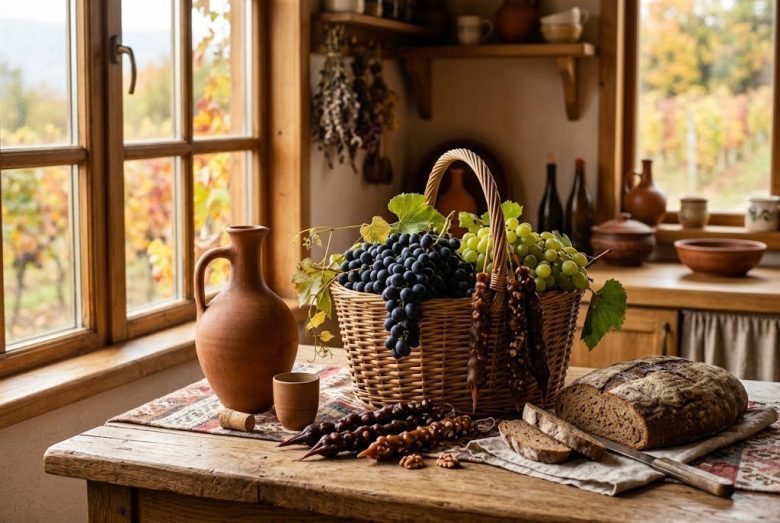
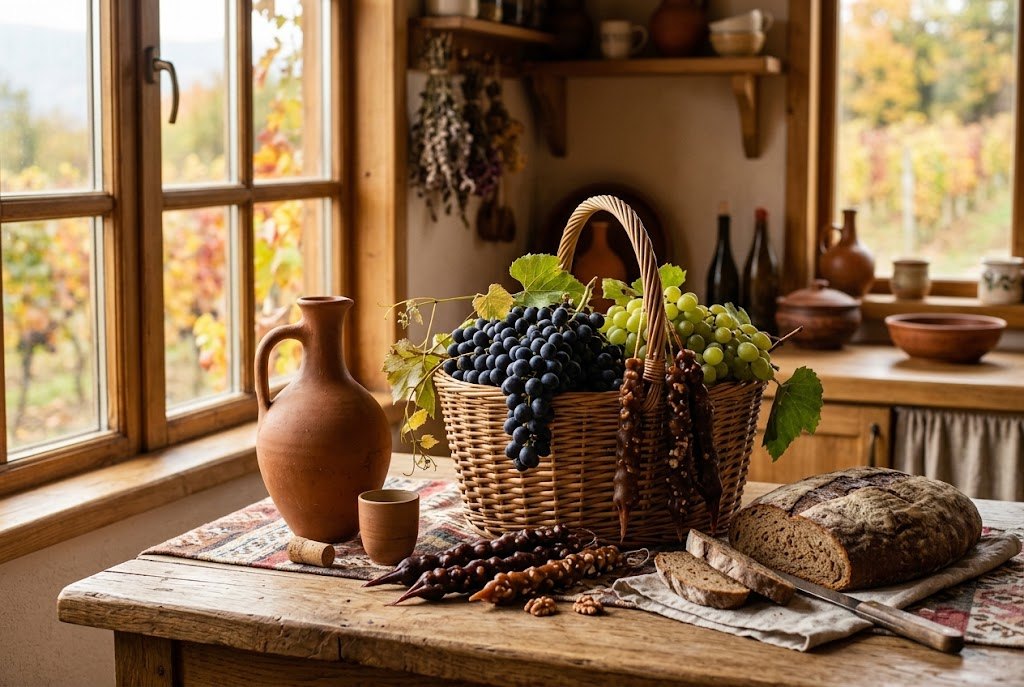
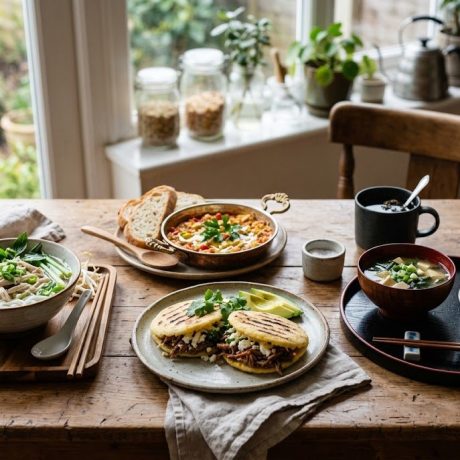
Freshly picked grapes, homemade wine and churchkhela – rtveli at home
👨👩👧 What Happens During Rtveli
Picking by hand. Whole families and their neighbours spend the day in the vineyard with baskets and buckets. Children help, and older people sing work songs.
Pressing. In the evening, the grapes are crushed – in some villages still by foot.
Boiling the must. Part of the fresh grape juice (tatara) is boiled down in big copper pots over a fire to make sweets.
The harvest feast. When the work is done, everyone sits down to a supra, a traditional Georgian feast with toasts led by the tamada.
The most famous region for rtveli is Kakheti in eastern Georgia, home of Saperavi and Rkatsiteli grapes. But in western regions like Imereti and Racha, families also make their own wine and celebrate in the same way.
🍬 Sweets Made from Grape Must
Churchkhela
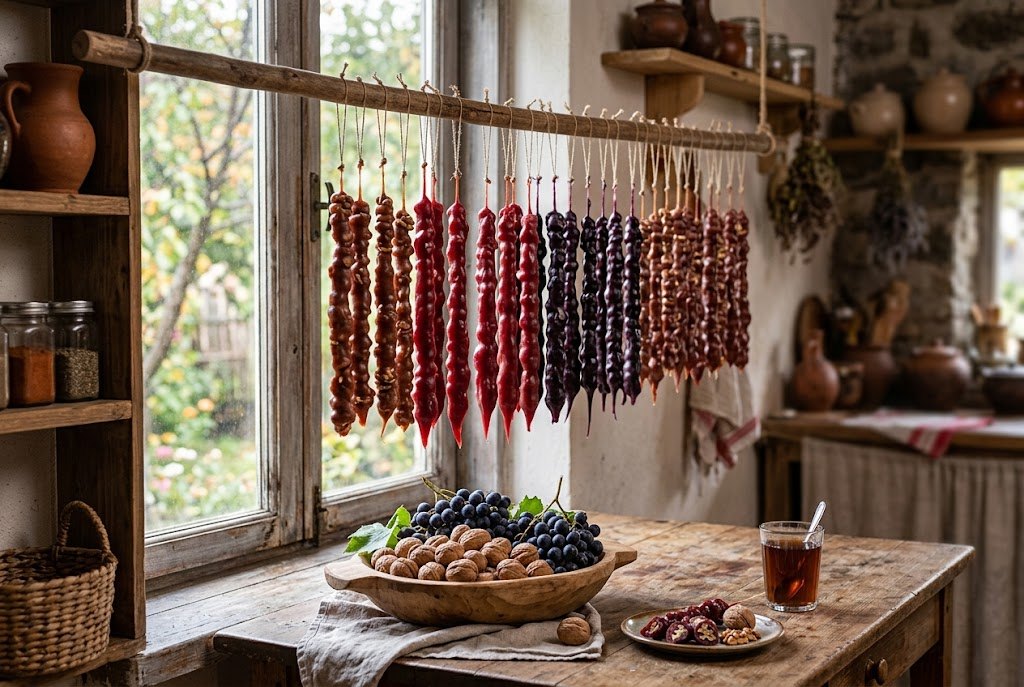
Georgia’s most famous sweet. Walnuts (or hazelnuts) are threaded onto a long string, then dipped again and again into thick, warm grape must mixed with flour, and hung up to dry for weeks. The result looks like a candle and tastes like a chewy, fruity nut bar – sometimes called the “Georgian Snickers”.
Churchkhela drying by the window after the harvest
Pelamushi
The same thickened grape juice, poured into a plate instead of used for dipping, sets into a soft, silky purple pudding. It is topped with walnuts and eaten chilled – a simple, naturally vegan dessert.
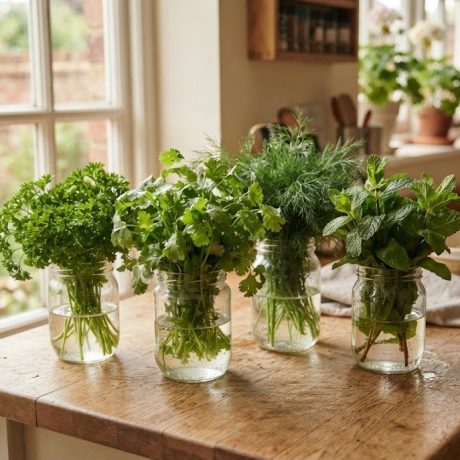
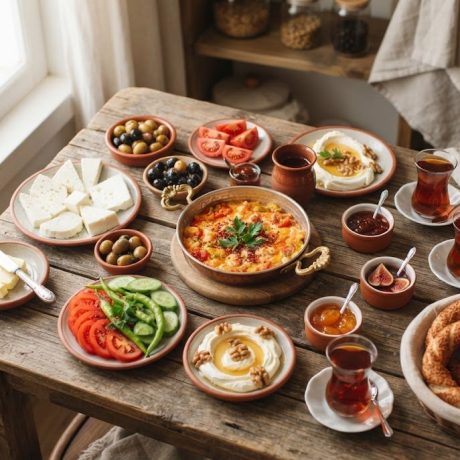
Fresh cheese, herbs, tomatoes and cucumbers – and, of course, last year’s wine from the qvevri.
🥂 Chacha – Georgian Grape Brandy
Nothing is wasted. After the wine is made, the leftover grape skins and seeds (chacha) are distilled into a strong clear spirit with the same name. Homemade chacha is often 50–65% alcohol and is poured in small glasses for toasts – carefully!
✈️ Visiting Georgia During Rtveli
When: usually from mid-September to late October, depending on the grape and the region.
Where: Kakheti (Telavi, Sighnaghi, Kvareli) is the classic choice, about 2 hours from Tbilisi.
How: many family wineries and guesthouses invite visitors to pick grapes, press them and join the dinner. Book ahead in October – it is the busiest time of year.
Tbilisi: the city holds the Tbilisoba festival in October, with harvest food, wine and churchkhela stalls in the old town.
❓ FAQ
What does rtveli mean? Rtveli is the Georgian word for the grape harvest and the celebrations that come with it.
When is rtveli in Georgia? Usually from mid-September to the end of October. Kakheti starts earlier; mountain regions like Racha finish later.
What is a qvevri? A large clay vessel, buried in the ground, used to ferment and store wine. The method is about 8,000 years old and is on UNESCO’s Intangible Cultural Heritage list.
What is churchkhela made of? Walnuts or hazelnuts on a string, coated many times in thickened grape juice with flour and dried.