
👉 At the end of October and the start of November, many cultures remember the dead, celebrate the harvest and welcome the dark half of the year – and almost all of them do it with food. Halloween in Ireland, Día de Muertos in Mexico, All Saints’ Day in Spain and Italy, St. Martin’s Day in Germany: each has its own special breads, sweets and dishes. Here are the traditional Halloween, Day of the Dead and autumn festival foods of 12 countries, and what they mean.
🇲🇽 1. Mexico – Día de Muertos (1–2 November)
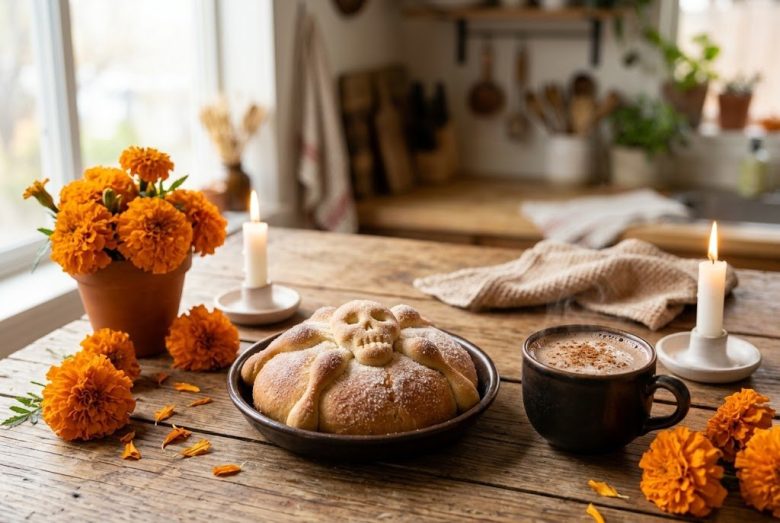
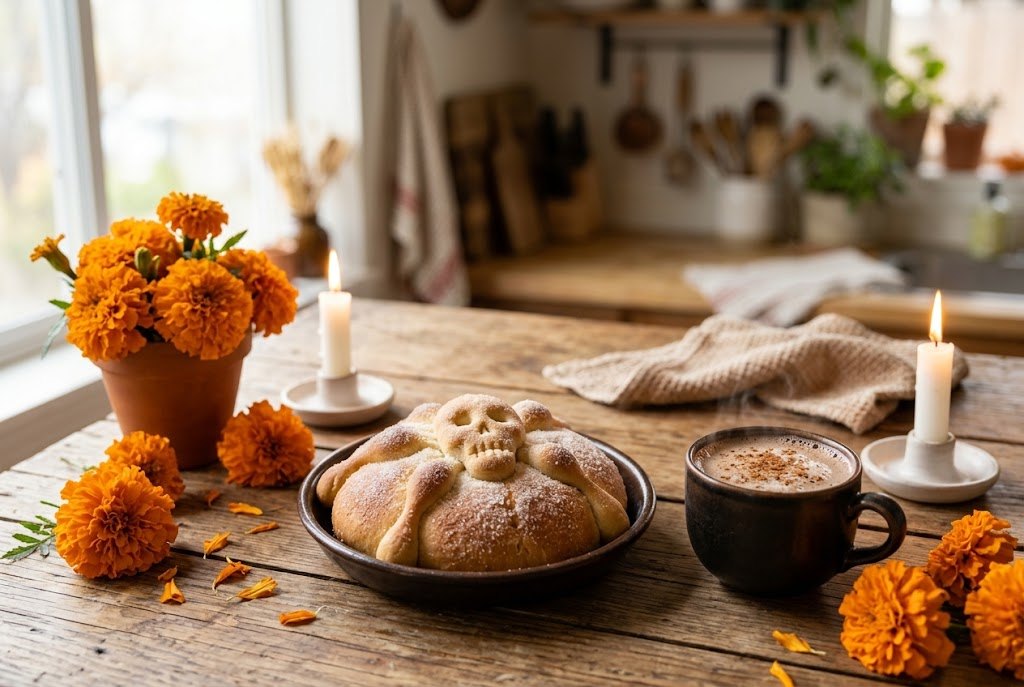
During the Day of the Dead, families build ofrendas – home altars decorated with orange marigolds (cempasúchil), candles and photos – and place the favourite foods of their loved ones on them. The star is pan de muerto, a soft, orange-scented sweet bread topped with dough shaped like bones and dusted with sugar. Next to it: colourful sugar skulls (calaveras), tamales, mole and thick hot chocolate or champurrado.
👉 Cook a Mexican feast with our birria tacos and chilaquiles rojos.
🇮🇪 2. Ireland – Halloween (Samhain)
Halloween began in Ireland as the Celtic festival of Samhain, the end of the harvest. The traditional cake is barmbrack, a fruit bread baked with small objects inside: whoever finds the ring will marry within a year. Families also ate colcannon – mashed potatoes with cabbage or kale – sometimes with coins hidden inside.
👉 Try our ham hock colcannon.
🇺🇸 3. United States – Halloween
Irish and Scottish immigrants brought Halloween to America, where it became a festival of costumes and trick-or-treating. The flavours are pure autumn: pumpkin pie, candy and caramel apples, roasted pumpkin seeds, apple cider and, of course, mountains of sweets.
🇬🇧 4. England – Soul Cakes and Bonfire Night
In medieval England, poor people went “souling” on All Souls’ Day, singing and praying for the dead in exchange for small spiced soul cakes – an early form of trick-or-treating. A few days later, on 5 November, Bonfire Night brings toffee apples, baked potatoes and parkin, a sticky oat and ginger cake from Yorkshire.
🇪🇸 5. Spain – All Saints’ Day (1 November)
Spanish bakeries fill with huesos de santo (“saints’ bones”) – little tubes of marzipan filled with sweet egg yolk cream – and buñuelos de viento, tiny fried puffs filled with cream. In Catalonia, the Castanyada festival is all about roasted chestnuts, sweet potatoes and almond-pine nut cookies called panellets.
🇮🇹 6. Italy – Ognissanti and the Day of the Dead
Italians bake ossa dei morti (“bones of the dead”), crunchy white biscuits, and fave dei morti, small almond cookies shaped like beans – beans were once an ancient food for the dead. In Sicily, children receive gifts and sweets “from the dead” on 2 November, along with colourful marzipan fruits.
🇵🇹 7. Portugal – Pão-por-Deus
On 1 November, children in Portugal go door to door asking for pão-por-Deus (“bread for God’s sake”) and receive small breads, cakes, nuts and fruit – very similar to trick-or-treating. In autumn, roasted chestnuts are sold on every street corner for the Magusto festival.
👉 A Portuguese sweet treat: pastéis de nata.
🇬🇹 8. Guatemala – Fiambre
On All Saints’ Day, Guatemalan families prepare fiambre, a huge, colourful cold salad that can have more than 50 ingredients: pickled vegetables, sausages, cold meats, cheeses, eggs and beets. Every family has its own secret recipe, and it is shared at the cemetery and with neighbours.
🇵🇭 9. Philippines – Undas
For Undas (All Saints’ and All Souls’ Days), Filipino families spend the day, and sometimes the night, at the graves of loved ones, sharing food like sticky rice cakes (suman, biko) and noodles, which symbolise long life.
🇩🇪 10. Germany – St. Martin’s Day (11 November)
Children walk through the streets with lanterns, and families eat a roast Martinsgans (St. Martin’s goose) with red cabbage and potato dumplings. Bakeries sell Weckmann – sweet bread men with a raisin face and a little clay pipe.
🇵🇱 11. Poland – All Saints’ Day
On 1 November, Polish cemeteries glow with thousands of candles as families visit graves. It is a quiet, family day that ends with a warm home meal – often soup, pierogi-style dumplings and cakes. 👉 Try Ukrainian-Polish varenyky or Polish bigos.
🇬🇪 12. Georgia – The Harvest and Chestnut Season
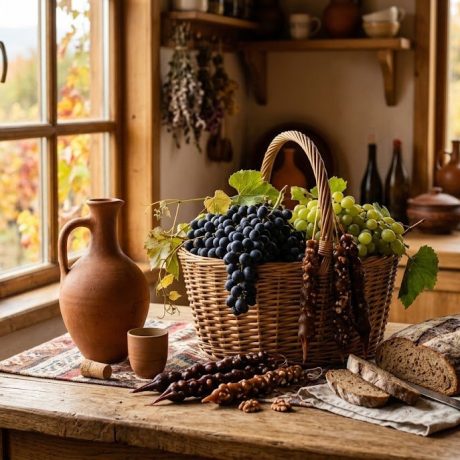
In Georgia, autumn means rtveli, the grape harvest. Families make churchkhela and pelamushi from fresh grape must, roast chestnuts, and cook warming dishes like kharcho.
🎃 Easy Autumn Festival Foods to Make at Home
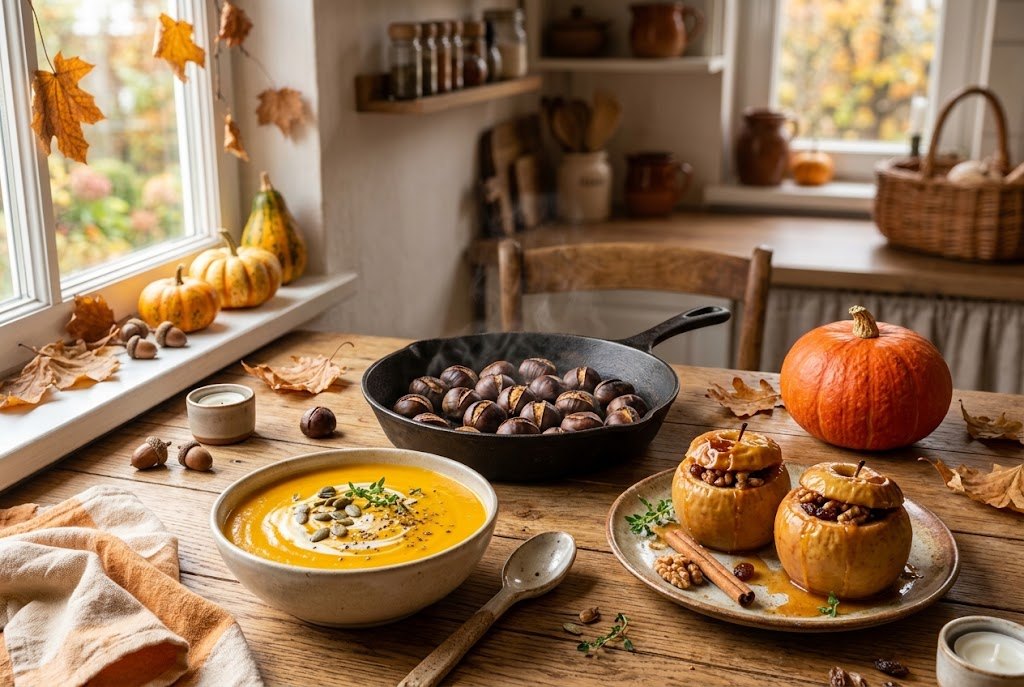
- Roasted chestnuts: cut an X in each shell and roast at 200°C (390°F) for 20–25 minutes, then wrap in a towel for 5 minutes and peel.
- Baked apples: core apples, fill with butter, honey, walnuts and cinnamon, and bake for 30–40 minutes.
- Pumpkin soup: roast pumpkin with onion and garlic, blend with stock and finish with a spoon of cream.
- Roasted pumpkin seeds: toss cleaned seeds with oil and salt and roast at 160°C (320°F) for 15–20 minutes.
👉 More cozy ideas: 25 comfort food recipes from around the world and soups from around the world.
❓ FAQ
What is the difference between Halloween and Día de Muertos?
Halloween (31 October) comes from the Celtic festival of Samhain and is now mostly about costumes and sweets. Día de Muertos (1–2 November) is a Mexican celebration where families honour and remember their loved ones with altars, flowers and food.
What is pan de muerto?
A soft, sweet Mexican bread flavoured with orange blossom or orange zest, decorated with dough “bones” and sugar, eaten around the Day of the Dead.
What is the traditional Irish Halloween food?
Barmbrack, a fruit bread with a ring baked inside, and colcannon, mashed potatoes with cabbage or kale.
Why are chestnuts eaten in autumn?
They are harvested in October and November, so roasted chestnuts became part of autumn festivals in Spain, Portugal, Italy, Georgia and many other countries.