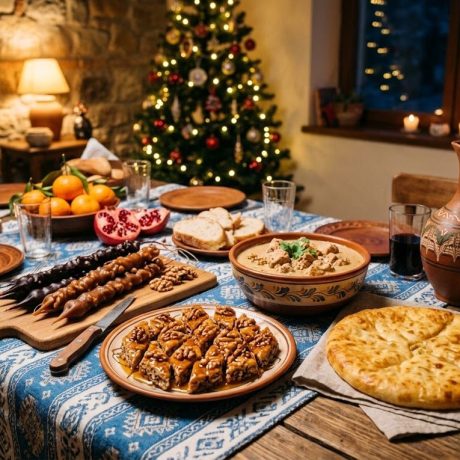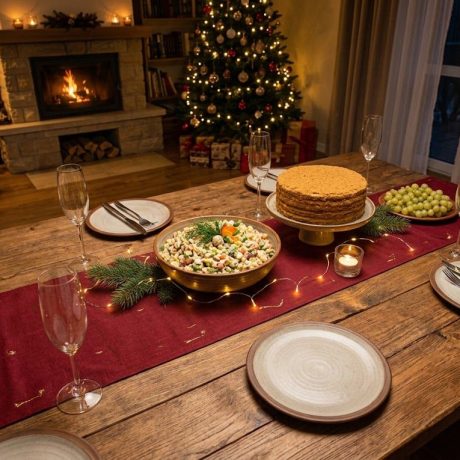
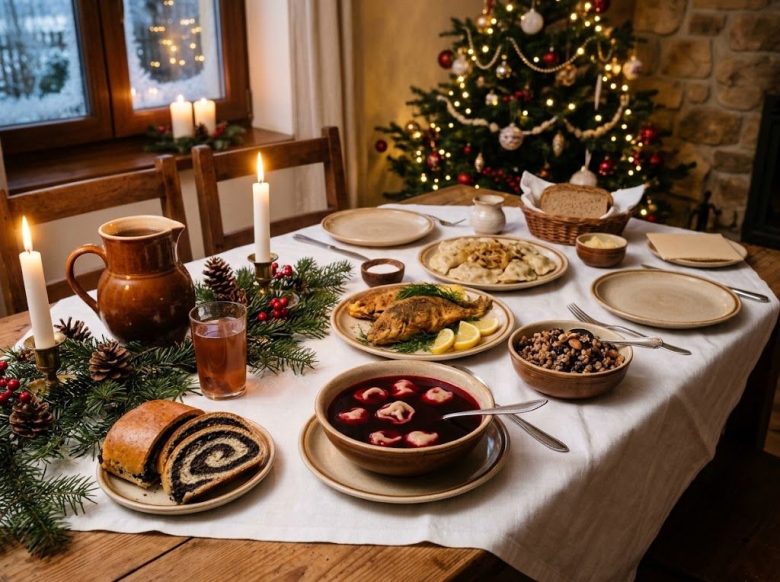

👉 In Poland and Ukraine, the most important meal of Christmas is not lunch on December 25th – it is supper on Christmas Eve. Families wait for the first star to appear in the sky, then sit down to a table with twelve meatless dishes, one for each apostle (and, some say, for each month of the year). Here is what is served at a Polish Wigilia and a Ukrainian Sviat Vechir, what each dish means, and how to bring a few of them to your own table.
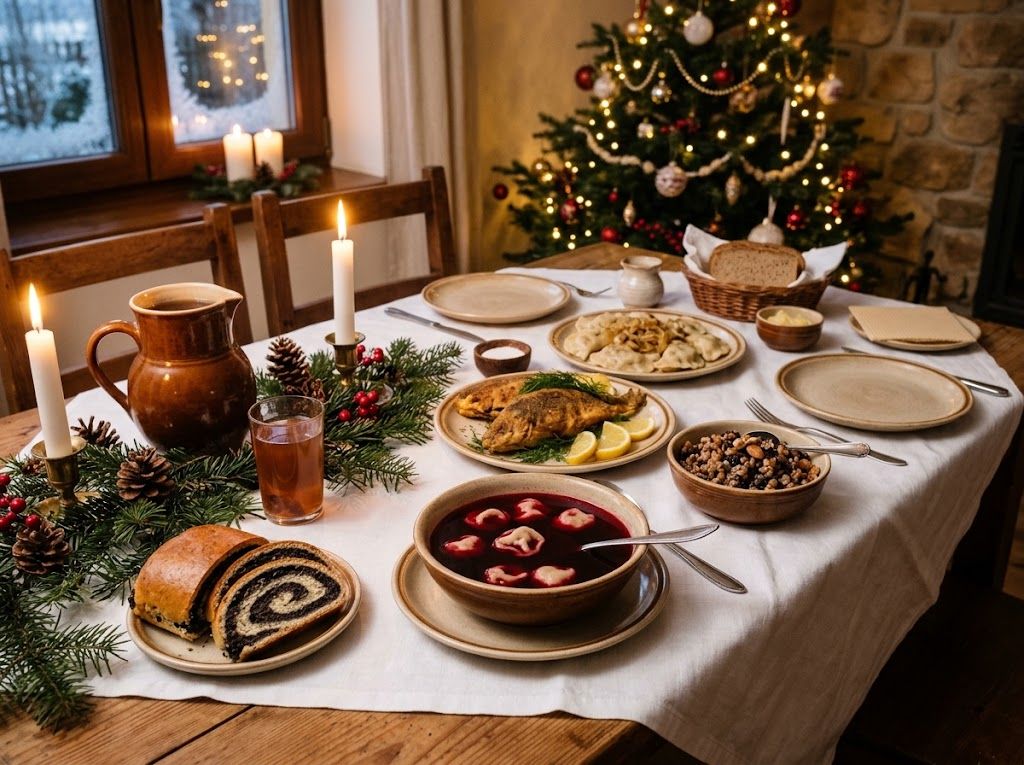
⭐ The Traditions of Christmas Eve
- The first star. Children watch the window for the first star of the evening – it recalls the Star of Bethlehem, and only then does the meal begin.
- No meat. Christmas Eve is the last day of the Advent (or Nativity) fast, so all twelve dishes are made without meat – mostly fish, mushrooms, grains, beans, cabbage and fruit.
- Hay under the tablecloth. A little hay is placed under a white tablecloth to remember the manger.
- An empty place. Polish families set one extra plate for an unexpected guest or a traveller.
- Sharing the wafer. In Poland everyone breaks a thin Christmas wafer called opłatek and wishes each other a good year before eating.
- The didukh. In Ukraine a sheaf of wheat called didukh stands in the corner of the room, symbolising the harvest and the spirits of the ancestors.
🇵🇱 Polish Wigilia: The 12 Dishes
There is no single official list – every region and family has its own – but these are the dishes you will find on most Polish tables:
1. Barszcz with uszka
A clear, ruby-red beet broth served with uszka – “little ears”, tiny dumplings filled with dried forest mushrooms. It is the soup most Poles connect with Christmas.
2. Mushroom soup
In some regions a creamy soup of dried wild mushrooms replaces or accompanies the barszcz.
3. Carp
Fried carp is the star of the evening. Traditionally the fish was bought alive days before and kept in the bathtub! A scale from the Christmas carp kept in your wallet is said to bring money all year.
4. Herring
Pickled herring in oil with onion, in sour cream, or with apple – usually several kinds on one table.
5. Pierogi with sauerkraut and mushrooms
Half-moon dumplings filled with sauerkraut and wild mushrooms, often served fried in butter with onion.
6. Sauerkraut with peas or mushrooms
Braised sauerkraut (kapusta) cooked with yellow peas or dried mushrooms – humble but essential.
7. Gołąbki
Cabbage rolls, on Christmas Eve filled with rice or buckwheat and mushrooms instead of meat.
8. Fish in aspic or Greek-style fish
Cold fish dishes: carp in aspic, or “ryba po grecku” – fried fish under a sweet-sour layer of carrot, onion and tomato.
9. Kutia
A sweet mixture of wheat berries, poppy seeds, honey, nuts and dried fruit, especially loved in eastern Poland.
10. Makowiec
A rolled yeast cake with a thick, sweet poppy seed filling.
11. Piernik
Honey gingerbread cake or spiced cookies, often baked weeks ahead.
12. Kompot z suszu
A smoky drink made by simmering dried fruits – plums, apples and pears – with spices.
More Polish cooking: on Christmas Day the meat returns, often with a big pot of bigos, the hunter’s stew. Also try naleśniki and placki ziemniaczane.
🇺🇦 Ukrainian Sviat Vechir: The 12 Dishes
In Ukraine, Holy Evening (Sviat Vechir) is now celebrated by most families on December 24th, while some still follow the older Julian calendar and celebrate on January 6th. The twelve dishes are similar to Poland’s, with a few Ukrainian favourites:
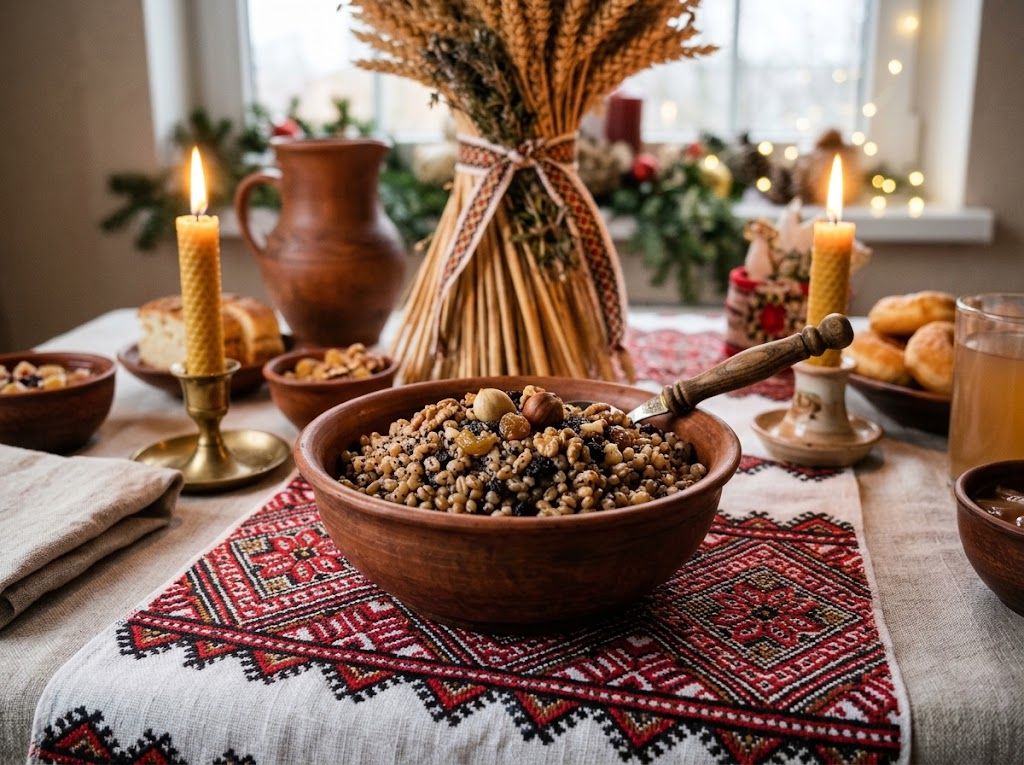
1. Kutia
The most important dish of the night: boiled wheat with poppy seeds, honey and walnuts. It is eaten first, and a spoonful is sometimes left for the ancestors.
2. Uzvar
A dried fruit compote, the traditional drink of the evening.
3. Borscht with vushka
A meatless beet borscht cooked with mushroom or vegetable broth and served with tiny mushroom dumplings.
4. Varenyky
Dumplings filled with potato, sauerkraut, mushrooms or sweet cherries. 👉 Try our potato varenyky.
5. Holubtsi
Cabbage rolls stuffed with rice, buckwheat or mushrooms.
6. Fish
Fried or stuffed fish, usually carp or pike.
7. Herring
Marinated herring with onion and sunflower oil.
8. Mushroom dishes
Fried mushrooms with onion or a creamy mushroom sauce, often made with forest mushrooms dried in summer.
9. Pampushky
Soft yeast buns, brushed with garlic oil or filled with jam or poppy seeds.
10. Beans
Mashed or stewed beans with garlic and fried onion.
11. Braised cabbage
Sauerkraut or fresh cabbage stewed with onion and carrot.
12. Pyrizhky and sweets
Small baked or fried pies with cabbage, potato or fruit, plus honey cakes and poppy seed rolls.
🧭 Why Twelve?
- The twelve apostles. The most common explanation.
- The twelve months. Tasting every dish is said to bring good luck for each month of the coming year.
- Everything from the land and water. The dishes are meant to include gifts from the fields, the forest, the orchard and the river – a thank-you for the year’s harvest.
❓ FAQ
Why is there no meat on Christmas Eve?
Christmas Eve ends the Advent fast in Catholic Poland and the Nativity fast in Orthodox and Greek Catholic Ukraine, so the meal is meatless. Meat dishes come on Christmas Day.
What is kutia made of?
Wheat berries cooked until soft, mixed with ground poppy seeds, honey, walnuts and sometimes raisins or dried apricots.
Do you have to make all 12 dishes?
Many families today make fewer dishes, or count drinks and desserts to reach twelve. The most important thing is to share the meal together.
When do Ukrainians celebrate Christmas Eve?
Since 2023 most Ukrainian churches celebrate Christmas on December 25th, so Holy Evening is on December 24th; some families still keep January 6th.
👉 Planning more holiday meals? Read Christmas foods around the world and New Year foods around the world, or make a festive medovik honey cake.