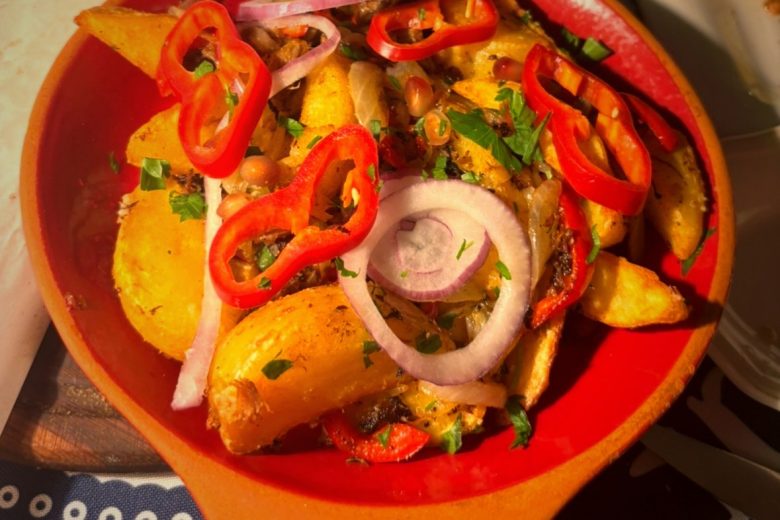
👉 Ojakhuri is Georgian home cooking at its most comforting: juicy pork and golden fried potatoes tossed with onions, garlic and khmeli suneli. Its name means “family dish”, and it is exactly that – simple, filling and loved by everyone at the table.
🇬🇪 What Is Ojakhuri?
Ojakhuri (ოჯახური) comes from the Georgian word ojakhi – “family”. It is a classic everyday meal and a favorite in Georgian restaurants, traditionally served sizzling in a clay ketsi pan. The meat and potatoes are cooked separately so both get crispy, then combined with onions and spices at the end.
🍳 How to Make Ojakhuri
1. Brown the pork. Heat a large heavy pan over medium-high heat. Add the pork with a pinch of salt and let it cook in its own fat (add a little oil if the meat is lean) for 20–25 minutes, stirring occasionally, until browned and cooked through
2. Fry the potatoes. Meanwhile, heat the oil in a second pan and fry the potato wedges in batches for 12–15 minutes until golden and crisp. Season with salt
3. Add the onions. Push the pork to one side, add the onions (and bell pepper, if using) and cook for 5 minutes until soft and lightly golden
4. Season. Add the garlic, khmeli suneli, ground coriander and black pepper and stir for 1 minute until fragrant
5. Combine. Fold the crispy potatoes into the pork, toss everything together for 2 minutes and finish with chopped cilantro
😋 Why You’ll Love Ojakhuri
Crispy potatoes, juicy pork and warm Georgian spices – it is the kind of dish that disappears from the pan in minutes. It also needs only basic ingredients.
💡 Tips for the Best Ojakhuri
Fry the potatoes separately so they stay crispy.
Choose fatty pork neck – lean meat becomes dry.
Serve straight from a cast-iron or clay pan to keep it hot.
No khmeli suneli? Mix dried coriander, fenugreek, savory and a little marigold or paprika.
🍽️ How to Serve Ojakhuri
Serve hot with fresh tomato and cucumber salad, Georgian pickles (mzhave) and bread. A spoon of tkemali plum sauce on the side is perfect.
❓ Ojakhuri FAQ
What does ojakhuri mean?
It means “family” or “home-style” in Georgian.
Can I make ojakhuri with chicken or beef?
Yes – chicken thighs or veal are popular variations.
“Ojakhuri” means “family” or “home-style” in Georgian, and every family really does make it a little differently:
Pork ojakhuri – the classic version in this recipe, with juicy pork shoulder or neck.
Veal or beef ojakhuri – use tender veal; brown it well and add a splash of water and a lid for a few minutes if the meat needs extra time.
Chicken ojakhuri – boneless chicken thighs cooked the same way, ready in about 30 minutes.
Mushroom ojakhuri – a vegetarian version with oyster or button mushrooms fried with the potatoes and onion, popular during fasting.
Ojakhuri in a ketsi – restaurants often serve it sizzling in a clay pan (ketsi), finished in a hot oven.
🥔 Getting Crispy Potatoes
Dry the potato wedges well before frying.
Fry them separately in hot oil and only combine with the meat at the end.
Salt the potatoes after frying so they stay crisp.
🍽️ What to Serve with Ojakhuri
Ojakhuri is a full meal on its own. In Georgia it comes with fresh tomato and cucumber salad, pickles, fresh herbs and a bowl of tkemali or ajika on the side.
❓ More Ojakhuri Questions
What does ojakhuri mean? It comes from ojakhi, the Georgian word for family – it is a homely dish made for everyone at the table.
Can I use leftover roast meat? Yes – leftover pork or mtsvadi is perfect. Just warm it with the onion and potatoes at the end.
How do I reheat ojakhuri? In a hot frying pan with a little oil, so the potatoes crisp up again. Avoid the microwave.